Automotive
 Aviation
 Defense & Public Safety
 Manufacturing
 Logistics
 Public Transport
 Mobility
 Energy & Utilities
 Smart Farming
 Smart Buildings
 EV charging
 Healthcare
 Retail
 Media & entertainment


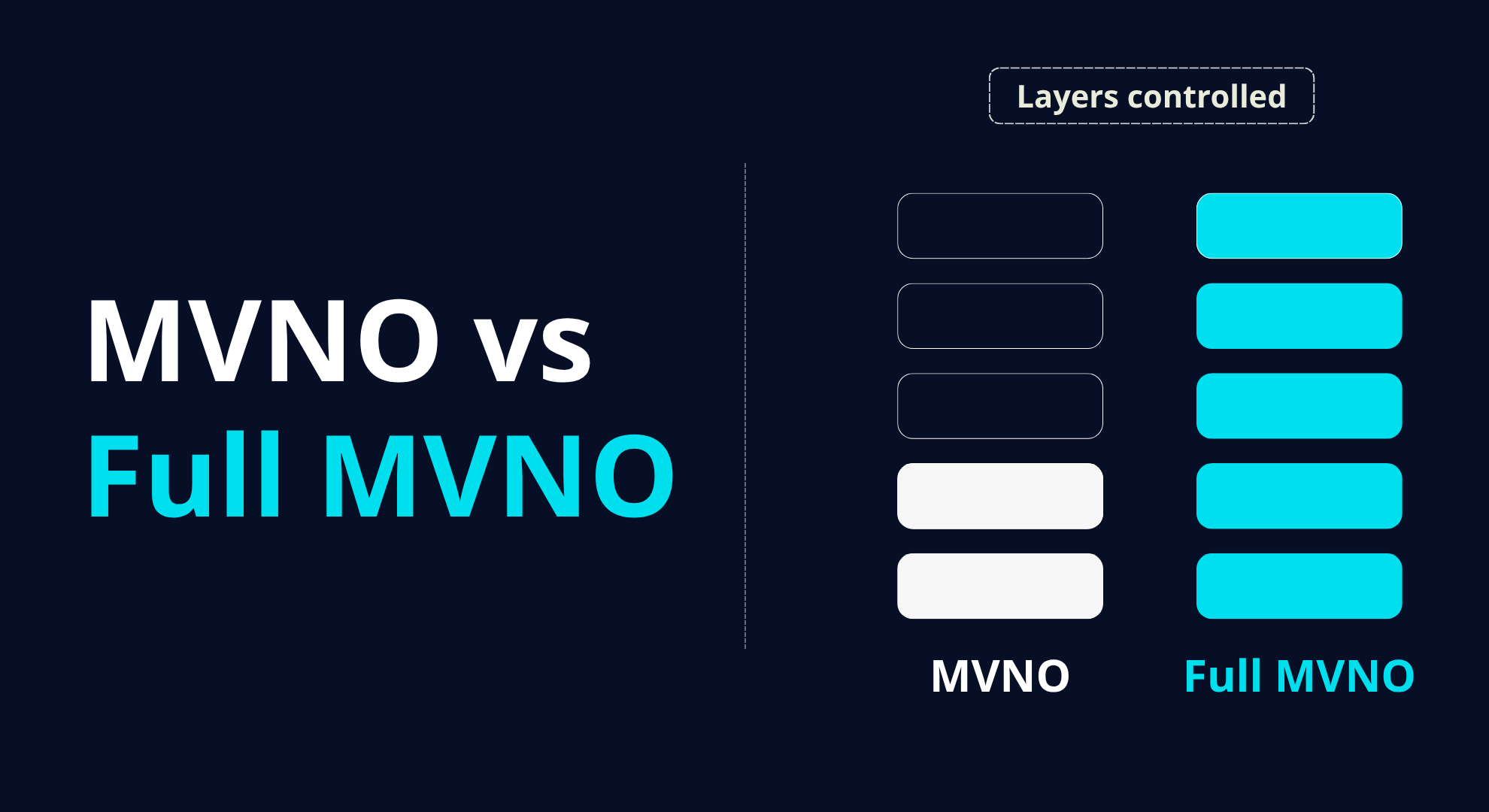
If you’ve been researching mobile connectivity partners for your business, you’ve probably come across the term MVNO (mobile virtual network operator). But not all MVNOs are built the same way, and the difference can have a real impact on the service you receive.
The key distinction comes down to one thing: does the provider own its own core network, or does it simply resell capacity from someone else’s?
What is an MVNO, exactly?
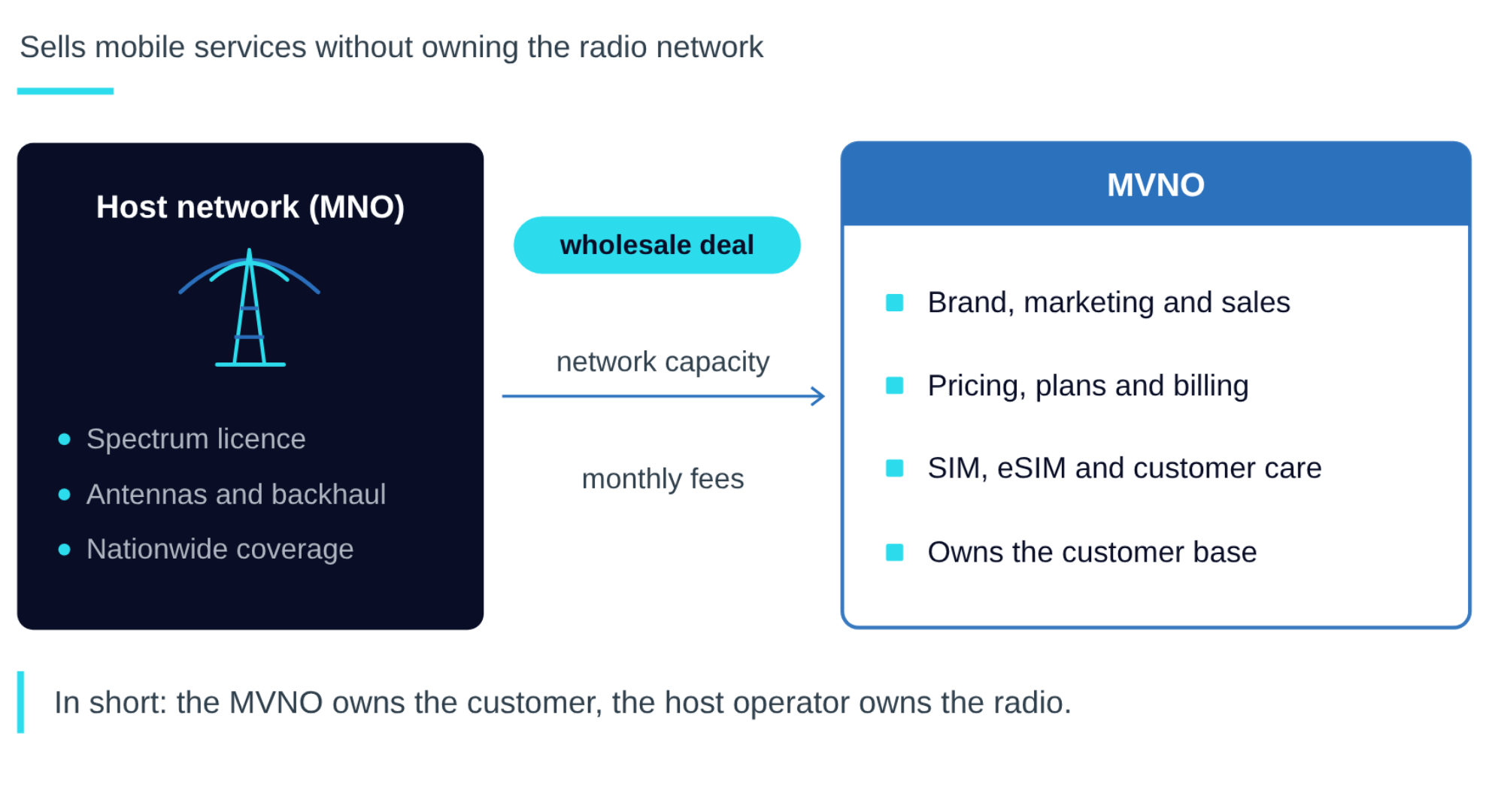
An MVNO is a company that provides connectivity services without owning the physical radio infrastructure (the towers and spectrum) that traditional mobile network operators like Orange or Vodafone do. Instead, MVNOs partner with existing network operators to deliver connectivity under their own brand.
That’s where the similarities end. Behind the scenes, MVNOs fall into different categories depending on how much of the network infrastructure they actually control.
Traditional MVNO: leasing a car
A traditional (or “light”) MVNO essentially rents everything from a host network operator (MNO), including the core network, the system that handles authentication, routing, billing, and data sessions.
It’s a bit like leasing a car exactly as the dealer configured it. You can drive it but you can hardly modify the engine, upgrade performance, or fix something yourself. Almost every change has to go back through the dealer, on their timeline and at their price.
This means the MVNO has limited ability to customize services, launch new features quickly, or control the quality of the service (QoS) it delivers.
Full MVNO: owning a car or building your own engine
A Full MVNO like Transatel, on the other hand, owns and operates its own core network. It only relies on a host operator for the physical radio access network (the towers and spectrum), while everything else, from SIM provisioning to routing policies to billing logic, is managed independently.
Think of it as owning the car and building your own engine. You still need public roads, the radio network, to actually drive anywhere, but everything under the hood is yours to design, tune, and repair.
A Full MVNO also holds its own mobile network code (MNC) and operates its own location database (HLR/HSS), which is what allows it to route calls and data sessions to interconnected numbers directly, rather than through a host operator’s systems.
Transatel operates under its own ITU-assigned network code, 901-37, a marker of genuine Full MVNO status that lightweight resellers simply don’t have.
This distinction unlocks several concrete advantages
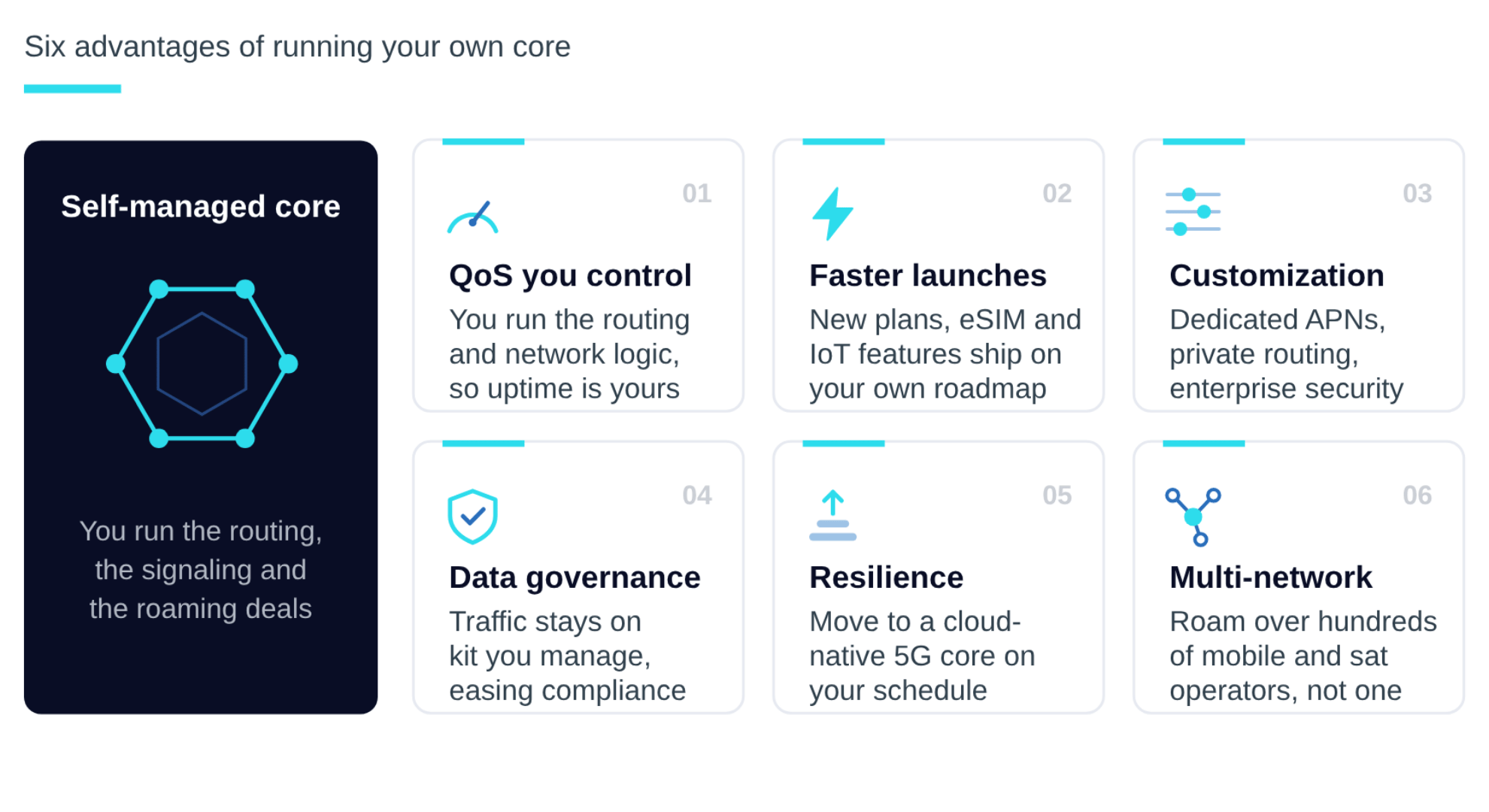
Greater control over quality of service (QoS): Because the Full MVNO manages its own routing and network logic, it can prioritize reliability and performance rather than depending on someone else’s operational priorities.
Faster innovation: A Full MVNO can design, test, and launch new services (new data plans, eSIM capabilities, IoT-specific features) without waiting on a third party’s roadmap.
Pricing flexibility: Full MVNOs can negotiate roaming and interconnection agreements directly with operators worldwide, often resulting in more competitive and transparent pricing for customers.
Deeper customization: Dedicated APNs, private routing, tailored data plans, and enterprise-grade security features are far easier to deliver when you control the infrastructure end to end.
Stronger data governance: Signaling and traffic data pass through infrastructure the Full MVNO itself manages, which simplifies compliance with data protection regulations and reassures enterprise customers about confidentiality.
Network resilience and continuity: Because the core is self-managed, a Full MVNO can invest directly in its own infrastructure upgrades, such as migrating to a cloud-native 5G standalone signaling core, rather than waiting for a host operator to modernize on its own timeline.
True multi-network roaming, not single-host resale. A reseller MVNO is tied to whichever networks its one host operator has agreements with. A Full MVNO with its own core can build roaming relationships across hundreds of mobile and satellite operators, giving devices a much wider pool of networks to fall back on wherever they are deployed.
Quick comparison: MVNO vs Full MVNO
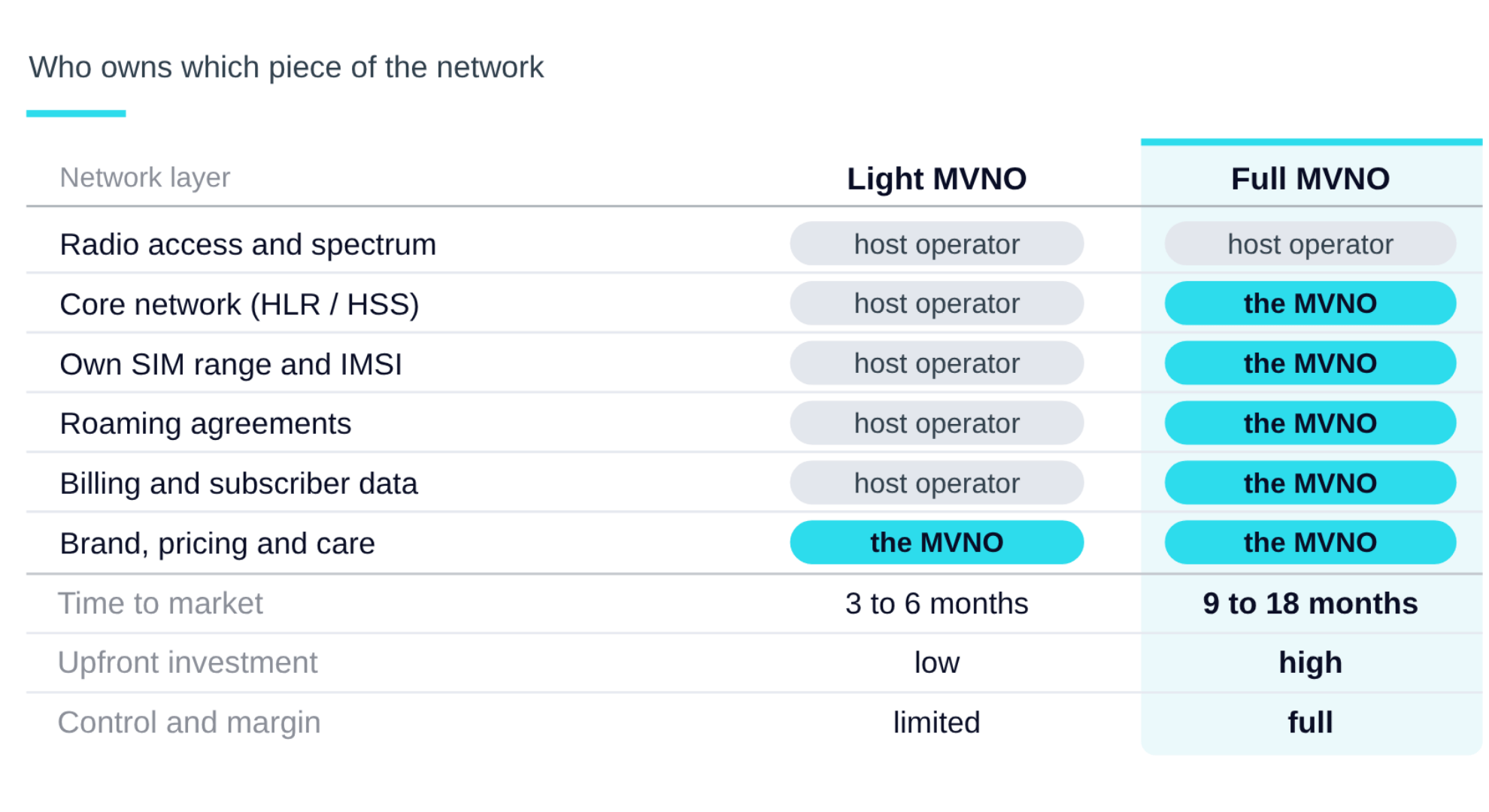
Why this distinction matters for your business
If you’re choosing a connectivity partner for global IoT deployment, fleet management, connected devices, or enterprise mobility, this isn’t just a technical footnote. It affects how quickly your provider can respond to your needs, how much you’ll pay over time, and how resilient your service will be when something goes wrong on a partner network.
Very few MVNOs worldwide operate their own core network. Transatel is one of them, backed by more than two decades of experience and a fully owned core infrastructure with regional Packet Data Network Gateways (P-GW), a distinction that shapes everything from the way we onboard new markets to the way we support clients & partners when it matters most.
Editor’s final thoughts:
Not all MVNOs are created equal. Understanding whether your connectivity provider owns its core network, or simply resells someone else’s, is one of the most important questions to ask before you sign a contract.
Talk to our team of global connectivity experts about what a Full MVNO can do for your business.