Automotive
 Aviation
 Defense & Public Safety
 Manufacturing
 Logistics
 Public Transport
 Mobility
 Energy & Utilities
 Smart Farming
 Smart Buildings
 Healthcare
 Retail
 Media & entertainment

At its simplest, an IoT device is any physical object that can sense its environment, convert the sense into an electrical signal, process or store basic data, and communicate over a network without constant human intervention. It might be a battery-powered temperature sensor in a warehouse, a connected meter on a city street, or a telematics unit hidden in a vehicle’s dashboard. All of these share three core traits: they collect data, they are addressable over a network, and they can exchange information with other systems.
Industry bodies tend to converge on a similar definition: “A network of physical things equipped with sensors, software, and connectivity that allows them to collect and exchange data. That simple idea has now scaled into billions of devices globally, from consumer gadgets to mission-critical industrial systems.”
For telecom decision makers, it is useful to see IoT devices not as gadgets but as endpoints in a distributed network: each one is a tiny node that generates traffic, consumes connectivity, and becomes a touchpoint for new digital services.
What is the basic anatomy of an IoT device?
Most IoT devices, regardless of vertical, are built from the same building blocks:
- Sensors and actuators: Rudimentary devices may measure temperature, vibration, location, energy consumption, occupancy, or hundreds of other variables. Actuators then turn insights into action: opening a valve, dimming lights, adjusting speed, locking a door.
- Processing and storage: A microcontroller or small processor runs firmware that filters data, applies simple logic, and manages connectivity. In some cases, edge processing reduces the data sent over the network, which is crucial when bandwidth or power is constrained.
- Connectivity module: This is where IoT connectivity comes into play: cellular (2G/3G/4G/5G, LTE-M, NB-IoT), Wi‑Fi, Bluetooth, ZigBee, LPWAN (LoRaWAN, Sigfox), or even satellite. The connectivity choice determines coverage, power profile, throughput, and cost. For many global, mobile, or regulated use-cases, cellular IoT with embedded SIM is preferred.
- Power source: Some devices are mains-powered; many rely on batteries that last for years. That shapes connectivity and reporting patterns: a soil sensor in a field may only “wake up” a few times a day to send a tiny payload.
- Identity and security: To be managed at scale, devices need a unique identity, secure onboarding, and encrypted communications. SIM / eSIM profiles, certificates, and keys are all part of the identity layer that telecom operators and connectivity providers help to manage.
Viewed this way, IoT devices are not standalone widgets. They sit inside a wider architecture of gateways, cloud platforms, OSS/BSS systems, and applications that turn device data into business value.
What are 5 key categories of IoT devices?
The IoT device landscape is vast, but for decision makers in the telecom market, a few broad categories keep recurring:
- Consumer and smart home devices: Smart thermostats, connected speakers, security cameras, and wearables. These are high-volume but often Wi‑Fi/Bluetooth-heavy and tied to consumer platforms rather than telecom-led connectivity.
- Industrial and manufacturing devices: Condition-monitoring sensors on motors and pumps, vibration and temperature probes on production lines, connected PLCs and gateways. These devices support predictive maintenance, OEE tracking, and safety improvements, often over cellular or industrial networks. Enterprise needs to take care that these devices should be capable of operating in the harshest of the environment.
- Smart city and utilities devices: Smart meters, parking sensors, street lighting controllers, environmental monitoring stations. They are typically deployed in large fleets, need long battery life, and benefit from LPWAN or cellular IoT with deep coverage.
- Mobility and transportation devices: Vehicle telematics units, asset trackers, e‑bike or scooter controllers, and in‐vehicle video systems. These are inherently mobile and cross borders, making resilient cellular IoT connectivity and roaming management critical.
- Healthcare and wellness devices: Remote patient monitoring wearables, connected medical equipment, smart pill dispensers. These devices must combine reliable connectivity with high security and compliance.
Each category has its own performance, security, and regulatory requirements, but they all rely on the same underlying promise: persistent, predictable IoT connectivity that can scale from hundreds to hundreds of thousands of devices.
How do IoT devices connect, and why do connectivity choices matter?
For many organisations, the differentiation is no longer about whether to connect an asset, but how to do it in a way that is sustainable, secure, and economically viable.
Some key considerations for IoT connectivity:
- Coverage and mobility: Fixed industrial sensors inside a factory can piggyback on‐site networks. A truck fleet moving across borders or containers at sea cannot. Cellular IoT, backed by roaming agreements and multi-IMSI or global eSIM, ensures that devices remain reachable as they travel.
- Power and bandwidth: A video camera streaming HD footage has very different requirements from a parking sensor sending a few bytes per hour. Low‑power wide-area technologies like LTE‑M and NB‑IoT are optimised for low‑throughput, battery-powered devices, while 4G/5G can support high-bandwidth use-cases.
- Control and lifecycle management: Decision makers increasingly want visibility over device activation, data usage, and performance. Managing SIM profiles, tariffs, and connectivity policies from a single console is becoming a must-have feature, rather than a nice-to-have feature.
- Security and segmentation: As IoT devices often sit outside traditional IT perimeters, dedicated IoT connectivity platforms can provide private APNs, VPNs, and traffic steering to keep device data away from the public internet and into secure cloud endpoints.
This is where global connectivity providers like Transatel position themselves: not just as another SIM provider, but as an enabler of global IoT connectivity that abstracts network complexity for OEMs, integrators, and enterprises.
What are some standard use cases for IoT devices?

1. Smart mobility and fleet management
Telematics units installed in vehicles combine GPS, GNSS, accelerometers, and cellular IoT connectivity to feed real-time data into fleet platforms. Operators can track utilisation, optimise routes, and detect unsafe driving patterns.
For cross-border fleets, a global IoT connectivity partner like Transatel ensures that vehicles stay connected without local SIM swaps or fragmented contracts.
2. Connected industry and predictive maintenance
Industrial OEMs are embedding sensors into machines to monitor vibration, temperature, and load. IoT devices send regular readings over secure networks to analytics platforms that flag anomalies before failures occur.
This shifts maintenance from reactive to predictive, opens new “equipment as a service” business models, and allows OEMs to stay connected to assets throughout their lifecycle.
3. Smart metering and energy optimisation
Utilities deploy smart meters and grid sensors to get near real-time visibility into consumption and network health. IoT devices send small payloads at regular intervals over low-power networks or cellular IoT.
With reliable coverage and long battery life, providers can roll out millions of endpoints and reduce manual meter readings, energy theft, and outages.
4. Asset tracking and logistics
Battery-powered trackers attached to pallets, containers, or high-value tools provide location and status information throughout the supply chain. With multi-country connectivity, organisations can follow goods from factory to customer without blind spots at borders. This improves customer service, reduces loss, and enables new SLAs based on real-time visibility.
5. Smart buildings and facilities
In buildings and campuses, IoT devices monitor occupancy, air quality, temperature, and equipment status. Facilities teams use this data to optimise cleaning, adjust HVAC systems, and detect leaks or failures early. Further, for security, monitoring devices like connected cameras, anti-theft, glass breakage sensors etc, gives enterprises real-time information to field security officers. When these devices are connected over secure, managed IoT networks, organisations avoid mixing operational technology traffic directly with IT user traffic.
Across all of these examples, the pattern is the same: IoT devices turn physical operations into digital data streams, and IoT connectivity determines how reliable, secure, and scalable those streams are.
Why IoT leaders should care now?
For telecom operators and adjacent players, IoT devices are not just “extra SIMs on the network”. They represent:
- New revenue pools: Embedded connectivity in vehicles, machinery, and consumer electronics creates recurring, high-margin revenue streams beyond traditional voice and data.
- Deeper integration into customer operations: Rather than selling connectivity as a commodity, telecom providers can bundle device management, security, analytics, and billing models tailored to IoT.
- Strategic positioning in digital transformation: By enabling reliable IoT connectivity, telecoms become critical partners in customers’ decarbonisation, automation, and resilience.
The challenge is that IoT connectivity is rarely local or static. Fleets move; devices roam, business models span markets, and OEMs need a single way to manage connectivity globally. That is precisely the gap Transatel’s multi-network connectivity is designed to fill.
How Transatel fits into the IoT device value chain
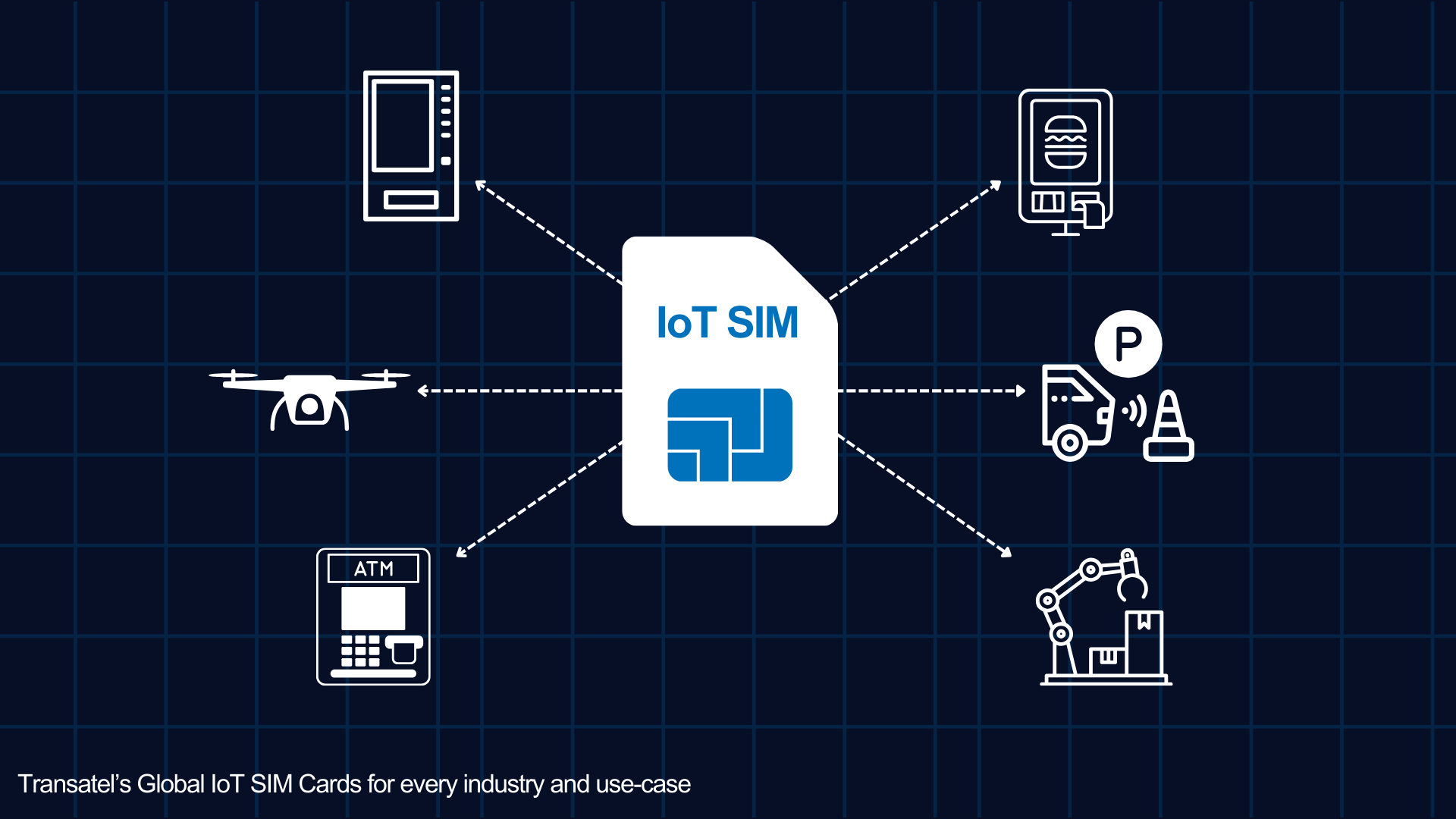
Transatel operates as a global IoT connectivity provider, giving device makers and enterprises a consistent way to connect, manage, and scale IoT devices across countries and networks. Instead of dealing with a patchwork of local operators and SIM fleets, customers work with a unified platform that:
- Provides cellular IoT coverage across multiple regions through a single commercial and technical relationship.
- Supports embedded SIM (eSIM) and advanced profile management, reducing logistics and allowing remote provisioning at scale.
- Offers APIs and portals for activation, monitoring, and control of IoT devices, so operations teams can see what is happening on the network in real time.
- Integrates with existing IT and cloud environments, helping organisations route device data securely to where it creates value.
For senior telecom decision makers evaluating partners or building their own IoT offers, this kind of global connectivity platform becomes a key building block: it de-risks rollouts, speeds up time to market, and makes IoT deployments operationally manageable.
Test Transatel’s global IoT connectivity platform today
If you are exploring new IoT services, piloting connected products, or looking to rationalise existing device fleets, the most efficient next step is to see how a dedicated IoT connectivity platform behaves with your own devices and use-cases. You can:
- Start with a limited pilot using a small batch of IoT devices across a few representative markets.
- Validate coverage, latency, and data usage patterns, and test how easily your teams can activate, monitor, and troubleshoot devices.
- Use the insights to refine your commercial model and technical architecture before committing full-scale deployment.
To move from theory to practice, test Transatel’s global IoT connectivity platform for FREE with your next proof of concept and evaluate how it supports the types of IoT devices and use-cases that matter most to your use-case or industry.