 Automotive
 Aviation
 Defense & Public Safety
 Manufacturing
 Logistics
 Public Transport
 Mobility
 Energy & Utilities
 Smart Farming
 Smart Buildings
 EV charging
 Healthcare
 Retail
 Media & entertainment
Bootstrap connectivity:
Where your device's journey truly begins
Trusted by global OEMs, Transatel's eSIM profile instantly connects devices right out-of-the-box across 200+ countries and territories. No activation delays or manual intervention needed, connectivity flows seamlessly from factory line to field operations.
Book a demoWe already connect





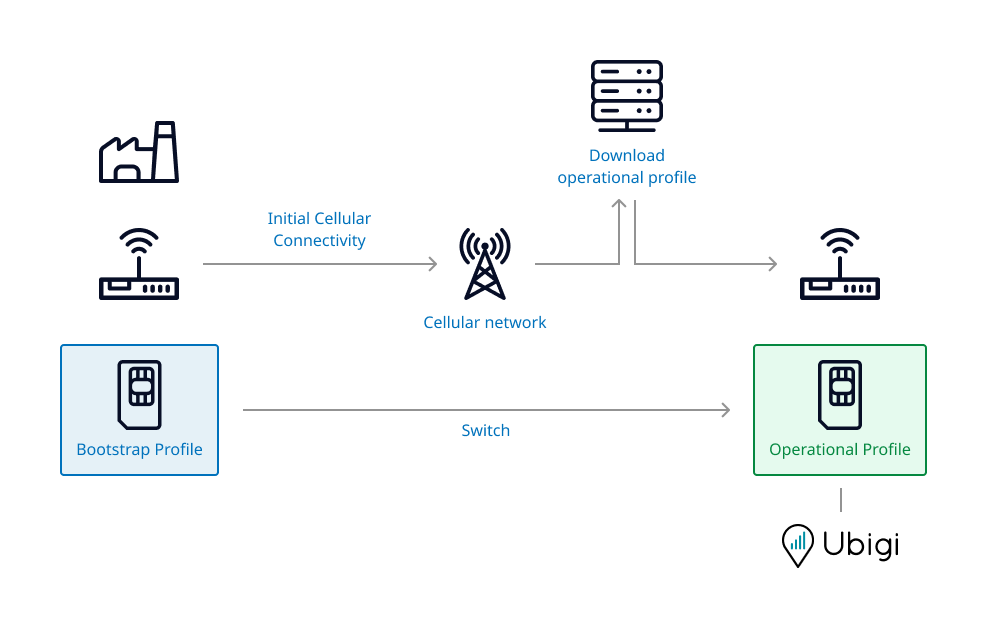
How does Embedded connectivity function?
- Embedded connectivity provided through a bootstrap profile is preloaded during manufacturing and springs into action as soon as the device is powered on
- Depending on the device configuration, the first connection is ensured by the bootstrap initial connectivity
- The bootstrap profile can remain available as a backup, providing ongoing support for OTA firmware and security updates, diagnostics, and future profile changes
- This ensures your devices stay connected and secure throughout their lifecycle
- Result: Powers on anywhere → connects → self-provisions, no manual steps
- As an added value, we can also include our Ubigi brand, which can be delivered as an operational profile directly to end users through integration with your platform.
Why choose Transatel’s Bootstrap connectivity?
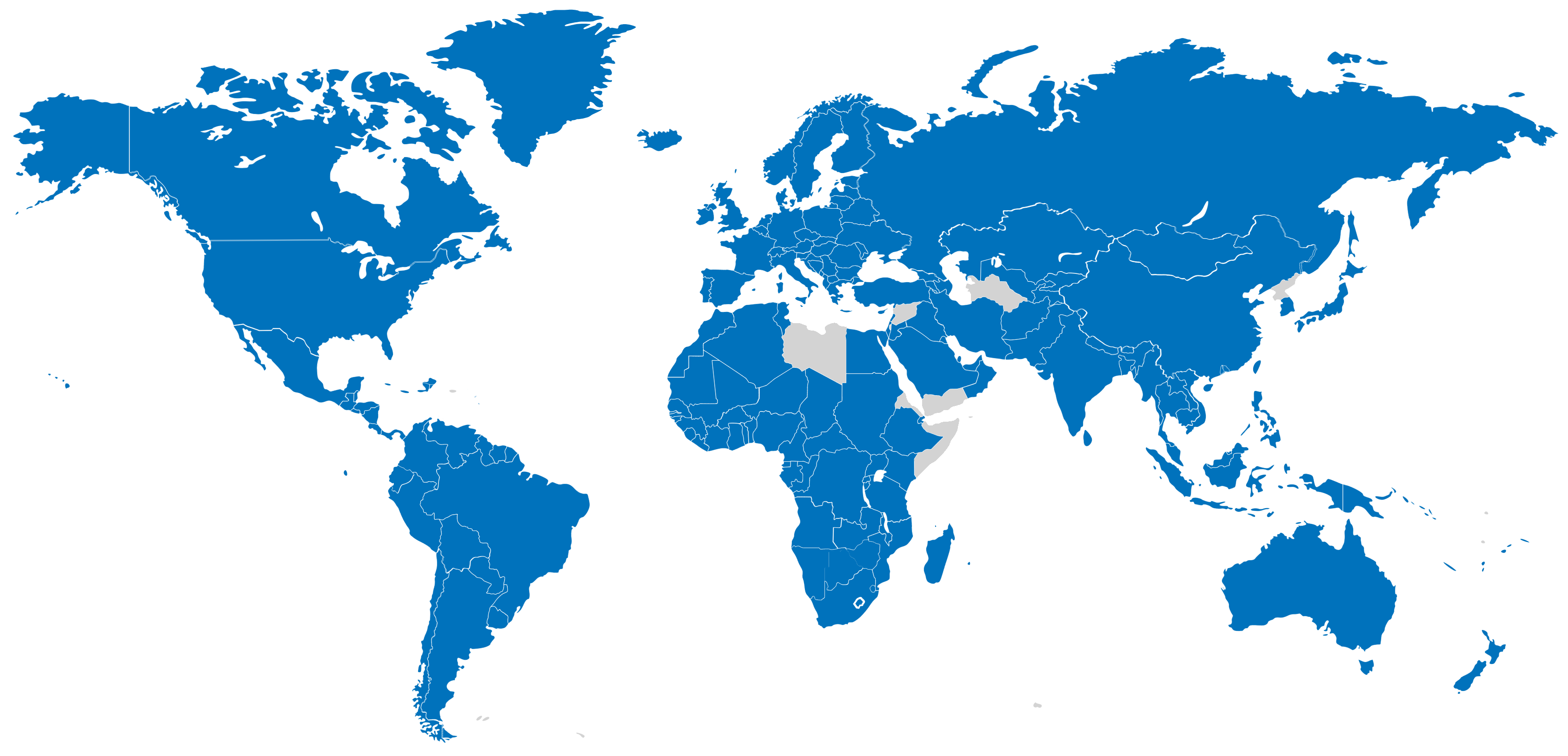
Covered countries
Countries not available yet
Global Reach and Trusted Partnerships
With standard global connectivity from Transatel, your devices can activate in over 200+ countries & territories. Our partnerships with SIM vendors and manufacturers ensure your devices are equipped with the most reliable embedded SIM technology available.
Technical Excellence as an official GSMA member
Our connectivity solution is built on global GSMA standards, including SGP.22 for consumer eSIMs, SGP.32 to anticipate adherence to the new IoT standard and SGP.42 for In-Factory Profile Provisioning (IFPP), allowing OEMs to pre-install connectivity profiles at the manufacturing stage. We also bring extensive expertise across all GSMA eSIM specifications, with proven success stories addressing diverse bootstrap needs and use cases.
RSP provisioning standards
We are actively exploring the latest advancements in Remote SIM Provisioning (RSP) for next-generation deployments, ensuring flexibility and future readiness. All communications and systems follow state-of-the-art security recommendations from GSMA, using only secure and interoperable protocols such as TLS 1.2 and HTTPS.
End to end solution
We work with all leading SIM vendors and offer any form factor, including industrial-grade MFF2 embedded SIMs, to deliver robust and reliable solutions. For specific regulatory requirements - such as local SM-DP+ hosting - we leverage deep experience and continuously adapt to evolving standards to provide compliant solutions.
Managing global supply chains is tough. Connectivity shouldn’t be.

Global Operator

Infrastructure Owner

eSIM Pioneer
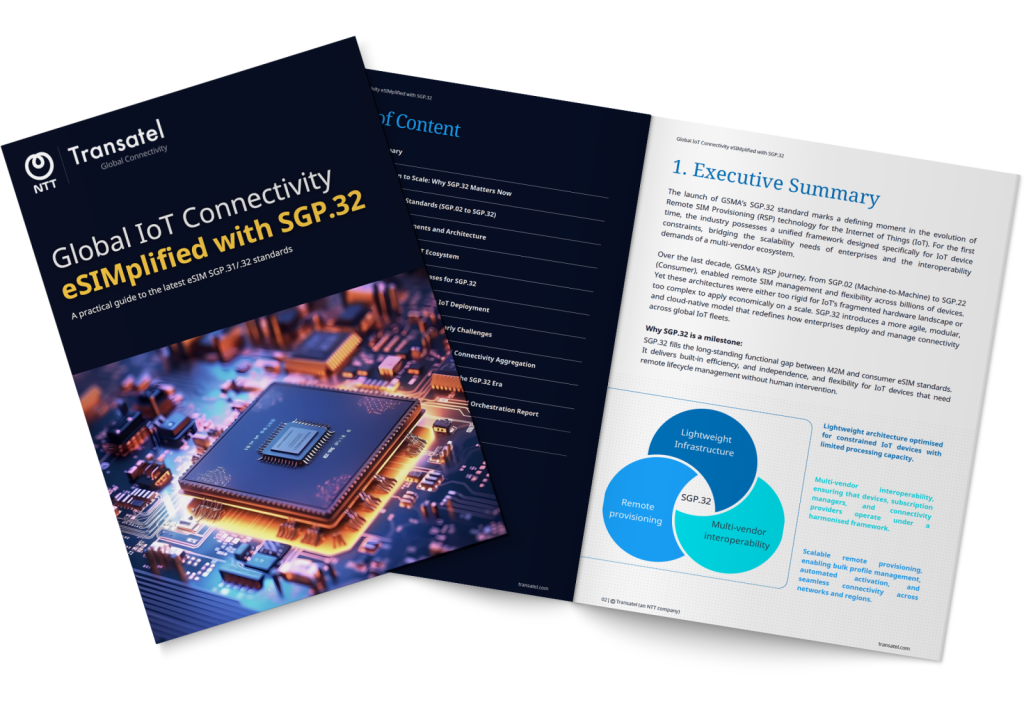
Will your competitors outpace you in eSIM SGP.32 adoption?
By 2030, the GSMA forecasts 38.7 billion IoT connections, with eSIM driving growth. As an official GSMA member and eSIM pioneer, we’ve created an essential eSIM ebook for your business to stay ahead. Inside:
- The evolution of GSMA standards (SGP.02 → SGP.32)
- Real-world SGP.32 use cases in 2026
- Strategy to win in the SGP.32 era
Contact us
Prospect - Home IoT - EN
"*" indicates required fields
FAQs
How does Bootstrap Connectivity differ from standard eSIM provisioning?
Standard eSIM provisioning requires manual profile downloads post deployment. Bootstrap Connectivity preloads the profile at the factory for immediate out of the box access. Transatel’s Bootstrap connectivity solution for OEMs eliminates setup steps while enabling Remote SIM Provisioning for operational profiles.
What GSMA standards does Transatel's Bootstrap Connectivity support?
Transatel aligns with SGP.22 for consumer eSIMs, SGP.32 for IoT bootstrapping, and SGP.42 for In-Factory Profile Provisioning (IFPP), enabling OEMs to preload profiles securely during manufacturing. This ensures interoperability, state-of-the-art security (TLS 1.2/HTTPS), and future-proofing for next-gen RSP deployments across all leading SIM vendors and form factors like rugged MFF2.
How does Transatel ensure global coverage for bootstrap activation?
Transatel provides seamless connectivity across over 200+ countries & territories through trusted partnerships. Devices activate anywhere without regional SIM variants. OEMs ship one global SKU reducing inventory complexity.
Which flexible models does Transatel offer device makers?
OEMs select simple bootstrap for operator downloads, backup profile retention for OTA campaigns, or conversion to primary IoT connectivity. Consumer devices like smartphones use temporary access. Industrial M2M leverages bootstrap as main profile.