Automotive
 Aviation
 Defense & Public Safety
 Manufacturing
 Logistics
 Public Transport
 Mobility
 Energy & Utilities
 Smart Farming
 Smart Buildings
 Healthcare
 Retail
 Media & entertainment

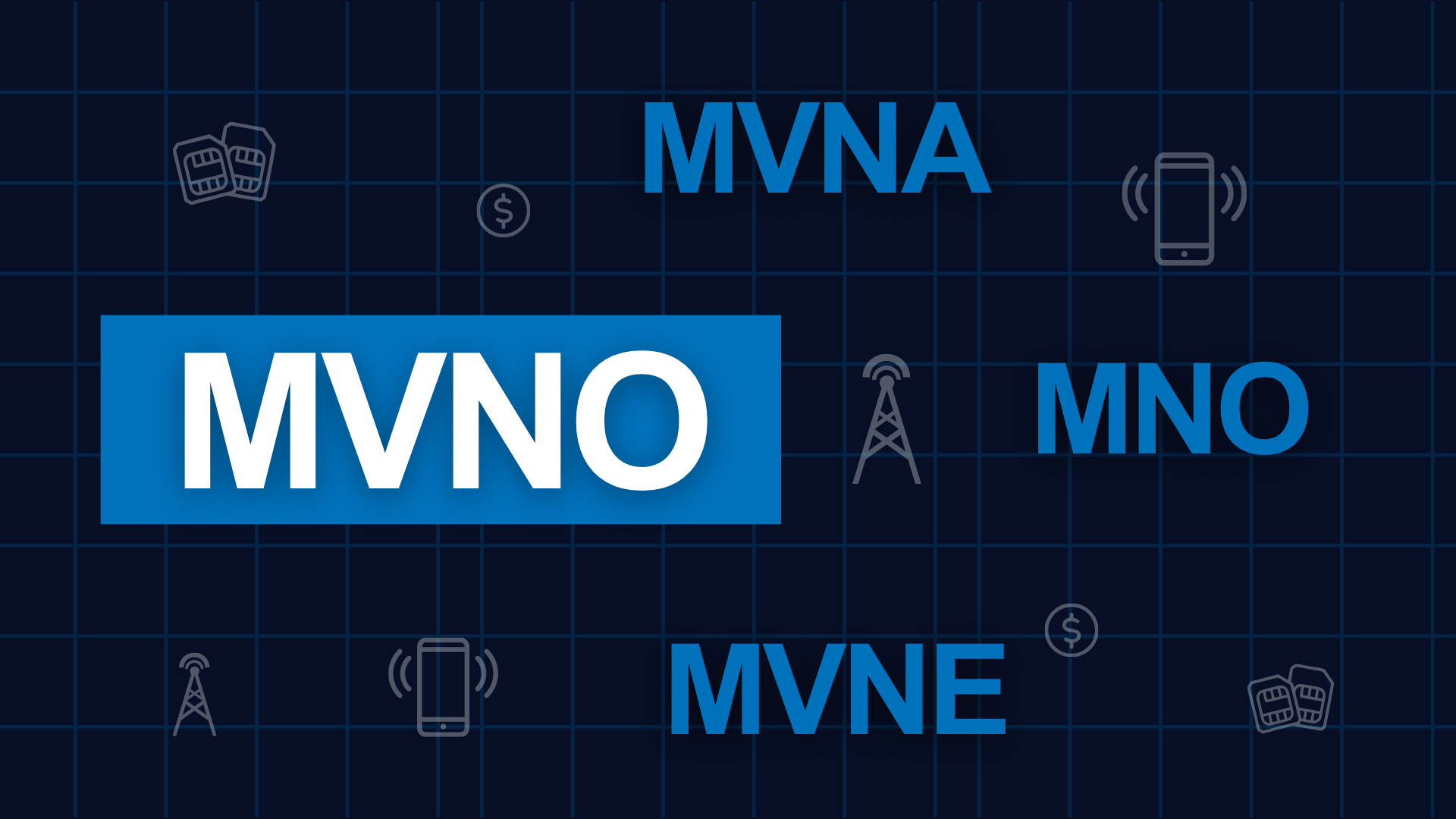
In simple terms, a Mobile Virtual Network Operator (MVNO) is a company that provides branded mobile services to customers using another operator’s network. Instead of investing heavily in physical infrastructure, an MVNO leases capacity from a Mobile Network Operator (MNO), allowing it to focus on branding, pricing, customer experience, and other services.
Millions of people use mobile services every day without realising that the name behind their SIM card might not actually own a network. These brands are called Mobile Virtual Network Operators (MVNOs), businesses that deliver connectivity using another operator’s infrastructure.
In this article, we explain what an MVNO is, how it differs from a traditional Mobile Network Operator (MNO), and why more enterprises, retailers, and digital brands are choosing to enter the telecoms market through the MVNO model. For any business exploring new customer engagement strategies or value-added digital services, the MVNO route may be the key to capturing the growing demand for connected experiences.
What is an MVNO?
Imagine running a mobile service brand without owning a single radio tower, antenna, or satellite. That is precisely what an MVNO does.
A Mobile Virtual Network Operator (MVNO) is a company that provides branded mobile services to customers using another operator’s network. Instead of investing heavily in physical infrastructure, an MVNO leases capacity from an MNO (Mobile Network Operator), allowing it to focus on branding, pricing, and customer experience.
This model enables innovative brands, from retailers to digital fintechs, to enter the telecommunications industry quickly and flexibly. By partnering with an MVNE (Mobile Virtual Network Enabler) such as Transatel, they can access all the technical, regulatory, and operational tools required to launch a mobile service with the heavy lifting already done for them.
What is the difference between an MVNO and an MNO?
| Feature | MVNO (Mobile Virtual Network Operator) | MNO (Mobile Network Operator) |
| Network Infrastructure | Leases access from an existing MNO | Builds, owns, and manages towers and radio networks as well as the backhaul (cable) linking it to their core network. |
| Investment Required | Low to medium | Very high (infrastructure, licences, maintenance) |
| Focus Area | Branding, customer relationship, pricing, innovation | Network performance, spectrum management, network rollout |
| Speed to Market | Fast, with MVNE support | Slow, requires regulatory approval and planning permission for each radio tower and its backhaul |
| Typical Examples | Retail brands, digital platforms, business service providers | Traditional telecom giants |
Why Launch Your Own MVNO?
Launching an MVNO opens the door to a lucrative and fast-evolving market. Whether you are a retailer, IoT provider, or financial institution, creating your own mobile brand helps you to deepen customer loyalty and drive new revenue streams.
Key reasons to consider launching your own MVNO include:
- Brand extension: You can offer mobile services under your own brand, keeping customer engagement within your ecosystem.
- New revenue streams: Generate recurring income through subscriptions and connectivity services.
- Customer loyalty: Combining mobile connectivity with your existing services encourages customers to remain within your brand offering.
- Market differentiation: By offering tailored plans, unique packages, or combined services
,your business stands out from traditional network operators.
Offering your own mobile service provides a competitive edge that positions your brand as modern, responsive, and customer-centric.
Why you need an MVNE to launch an MVNO
While the idea of becoming an MVNO is exciting, the practicalities can be complex. This is where an MVNE, or (Mobile Virtual Network Enabler), steps in.
An MVNE such as Transatel acts as the glue between the MNO and the MVNO. It provides the technical and operational backbone required to launch and run your service smoothly. This includes:
- connectivity management platforms
- billing systems and subscriber management
- SIM card provisioning and activation tools
- network integration and testing
- regulatory compliance and security measures
In essence, the MVNE helps you translate your business vision into a functional telecom operation. You focus on marketing, customer experience, and growth, while the MVNE handles technology and network integration.
How to partner with an MVNE?
Transatel is one of the world’s leading MVNEs, enabling start-ups and global brands to build, scale, and manage their own MVNOs with ease. Backed by more than two decades of experience, Transatel owns and operates its full core infrastructure.
Our turnkey platform covers everything from connectivity management and network access to regulatory compliance. Whether you aim to launch a mobile brand, Transatel provides the tools, expertise, and network access to make it happen.
When you partner with Transatel, you gain more than a technical enabler. You gain a strategic partner who understands your business and revenue ambitions. In short, we help you turn the challenge of “what is an MVNO?” into an opportunity for innovation and growth.
Click here to claim a FREE consultation with one of our MVNO experts and learn how to launch your own mobile brand.