Automotive
 Aviation
 Defense & Public Safety
 Manufacturing
 Logistics
 Public Transport
 Mobility
 Energy & Utilities
 Smart Farming
 Smart Buildings
 Healthcare
 Retail
 Media & entertainment



For EV manufacturers, charging operators, grid owners and fleet managers, EV battery degradation is more than a technical curiosity. It directly affects range, residual value, warranty exposure and the economics of every vehicle and charger on your balance sheet.
Modern EVs rely on lithium ion cells whose capacity declines over time through a mix of calendar ageing and cycling ageing. Calendar ageing is the slow loss of capacity as the pack sits at a given state of charge, while cycling ageing is driven by repeated charge and discharge during real-world operations. The question is no longer whether batteries will degrade, but how fast they will do so under specific duty cycles and charging behaviours.
This is where data from EV charging systems and IoT connectivity becomes central to any serious battery strategy. Always-on telemetry gives OEMs and operators the evidence they need to control the conditions that accelerate degradation and to prove the effectiveness of their mitigation measures.
What causes EV battery degradation in practice?
While the chemistry is complex, the operational drivers of EV battery degradation are now well documented across large datasets.
Key factors include:
- High and low state of charge exposure: batteries that spend long periods near 0 percent or 100 percent state of charge show faster capacity loss than those kept in a mid band.
- Charging power and profile: frequent high power DC fast charging raises cell temperature and mechanical stress, which correlates with higher annual degradation compared with slower AC charging.
- Temperature: persistent exposure to very hot or very cold environments accelerates chemical ageing or restricts the ability of the pack to accept and hold charge effectively.
- Depth of discharge and utilisation: deep daily cycles and high mileage usage increase wear, as each full cycle contributes incrementally to capacity fade.
How connected EV charging systems can help prevent EV battery degradation
EV charging systems are not just energy delivery points. They are control surfaces for battery health. When integrated with vehicle and backend data, they can enforce practices that reduce EV battery degradation without compromising operations.
Practical levers include:
- Smart limits on state of charge: chargers can default to 80 percent for daily use and only push to 100 percent when range is truly needed, reducing time at extreme SoC.
- Intelligent scheduling: aligning charging with cooler ambient temperatures and grid-friendly time windows helps limit thermal stress while supporting grid stability.
- Contextual use of fast charging: by reserving high power DC for specific scenarios and steering routine charging to lower power options, operators can keep fast charge exposure below thresholds associated with higher degradation rates.
- Dynamic profiles by asset type: buses, delivery vans and passenger cars can receive different charging profiles tuned to their duty cycles and battery designs.
- To make these strategies stick across thousands of plugs and vehicles, the control logic has to be informed by real-time data and made available wherever the charger is deployed. This is precisely where robust IoT connectivity enters the picture.
What is the role of IoT connectivity in reducing EV battery degradation
An effective EV battery degradation strategy depends on continuous, granular data from vehicles, chargers and energy systems. IoT connectivity provides the communications fabric that turns isolated components into a coordinated, data-driven ecosystem.
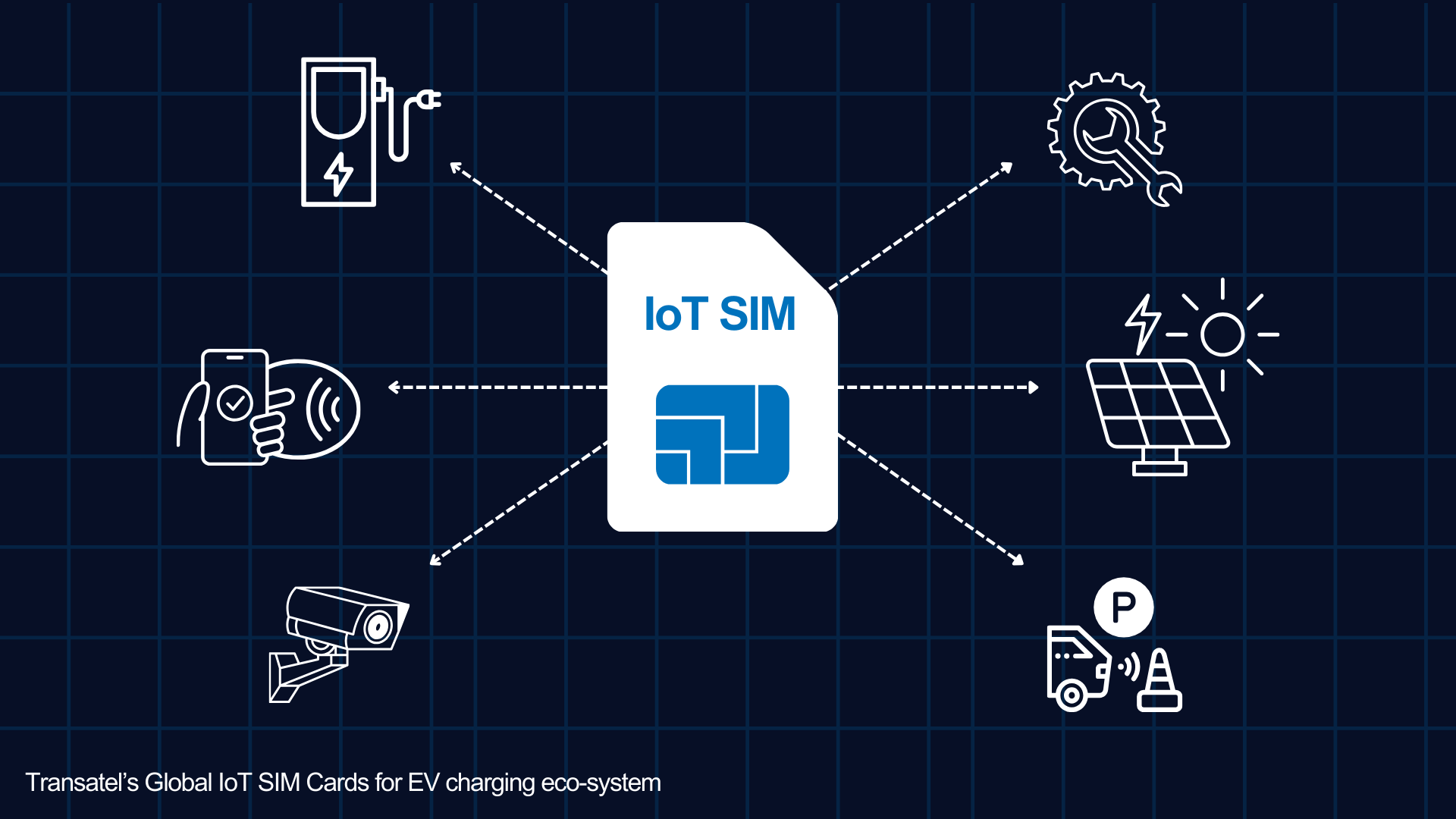
Three layers benefit directly:
- In-vehicle battery monitoring: IoT-enabled telematics and battery management systems stream voltage, current, temperature, state of charge and state of health data, which allows algorithms to predict degradation and remaining useful life with much higher accuracy.
- Connected EV charging systems: each charger becomes a managed device supporting the latest standards like OCPP 2.0.1. This allows for much more granular battery data reporting (such as SOH) and over-the-air configuration, report utilisation and power delivery, and synchronise with fleet and grid constraints, enabling dynamic charging profiles.
- Fleet and grid orchestration: aggregators and operators can coordinate charging windows, limit peak loads and avoid stressing the grid while still meeting operational requirements, all with battery health in mind.
For global OEMs and operators, this is challenging to do over a patchwork of local networks. Multi-network IoT SIMs give vehicles and chargers resilient coverage across borders so that battery and charging data flow stays continous, even when a single network is unavailable.
Why global, multi-network IoT SIMs matter for EV fleet operators
The effectiveness of any EV battery degradation mitigation programme depends on the completeness and continuity of the underlying data. Blind spots appear when vehicles or EV charging systems lose connectivity, whether due to cross-border travel, local outages or coverage gaps.
A global, multi-network IoT SIM helps to:
- Prevent data gaps at borders, ensuring uninterrupted telemetry for vehicles and charging infrastructure moving across countries.
- Support AI analytics and digital twin models, which rely on continuous datasets to accurately predict degradation and optimise charging strategies.
- Enable value tracking and compliance, including reliable SoH reporting aligned with emerging regulations such as the EU Battery Passport, supporting certification, transparency, and improved resale value.
- Simplify global deployment, eliminating the need for multiple local connectivity contracts and SIM management processes.
For a global connectivity provider like Transatel, this translates into EV and charging solutions that stay connected to the right network at the right time. That resilience is what allows your battery strategy to move from theory to day-to-day operational reality.
Editor’s Final Thoughts
Slowing EV battery degradation is no longer just about better cell chemistry. It is about how intelligently you operate every vehicle and every charger across your footprint, guided by data that only constant connectivity can provide.
By combining EV charging systems, telematics and analytics with global multi-network connectivity, you can:
- Track battery health in real time across markets, duty cycles and climates.
- Deploy and refine charging strategies that protect both the battery and the grid.
- Turn battery longevity into a differentiator for drivers, fleet customers and investors who care about total cost of ownership.
If you operate EVs, chargers or grid assets and want to see how always-on connectivity can support your battery strategy, you can start by testing Transatel’s global multi-network IoT SIM in a pilot deployment and measure the impact on your EV battery degradation insights within weeks.