Automotive
 Aviation
 Defense & Public Safety
 Manufacturing
 Logistics
 Public Transport
 Mobility
 Energy & Utilities
 Smart Farming
 Smart Buildings
 EV charging
 Healthcare
 Retail
 Media & entertainment
The ICCID number (Integrated Circuit Card IDentifier), is the unique serial number attached to every physical SIM card or eSIM profile worldwide. Think of it as a passport for your connectivity module: without it, without it, operators and connectivity platforms cannot reliably manage or track devices across networks.
As eSIM adoption surges, with Juniper Research projecting 1.5 billion global eSIM connections by 2026, including rapid IoT growth in logistics and smart infrastructure, understanding ICCIDs has become critical for IoT engineers, fleet managers, and connectivity teams working on global deployments.
ICCID Number : Structure breakdown
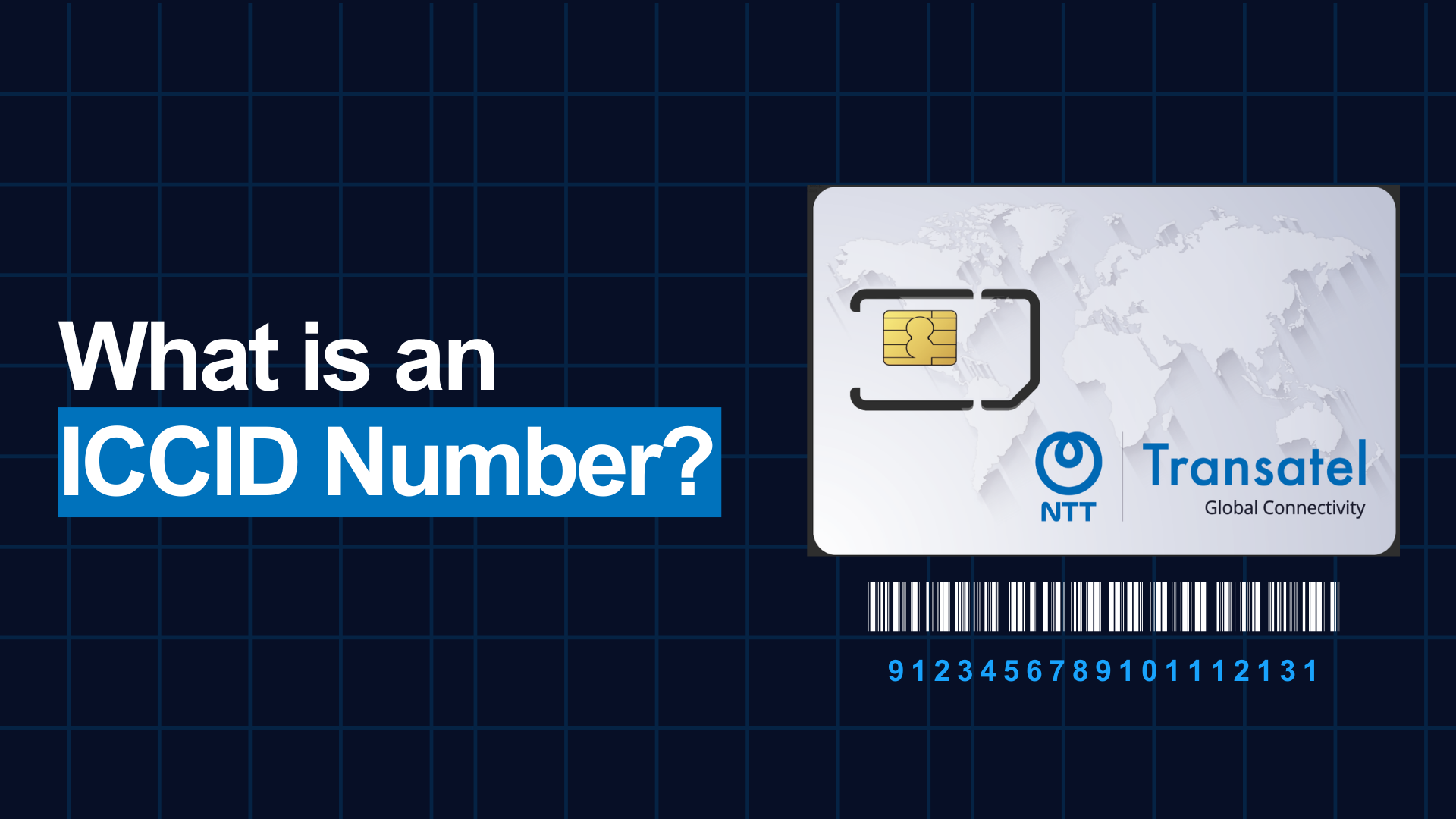
An ICCID is a 19–22 digit identifier embedded in every physical SIM card and every eSIM profile. It uniquely identifies the profile instance rather than the subscriber using it. Every ICCID follows a precise ISO/IEC 7812 format, ensuring global uniqueness and easy parsing network cores.
- Major Industry Identifier (MII): Starts with “89” for telecom – your first clue it’s a SIM, not a credit card.
- Issuer Identification Number (IIN): Next 2–7 digits flag the country code (e.g., 33 for France) and Mobile Network Operator (MNO) like Transatel’s affiliates.
- Individual Account Identification Number (IAIN): Core payload – up to 12 digits uniquely tagging the SIM instance within the issuer’s pool.
- Check Digit: Final Luhn algorithm digit validates the whole string against transmission errors.
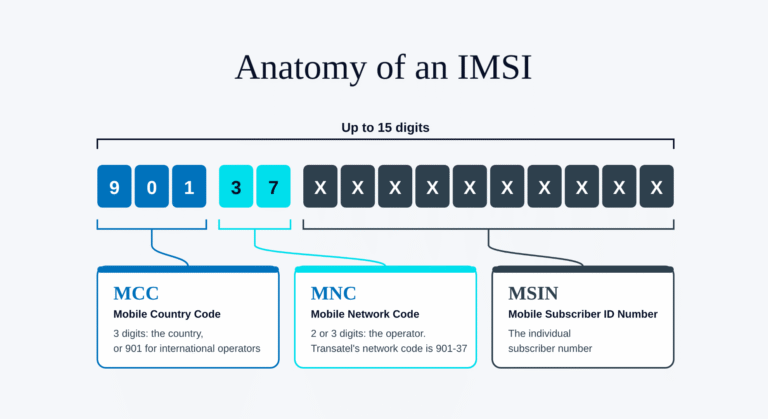
Example: 8988 2810 3456 7890 1234 5 decodes to telecom (89), French issuer (88), specific account (2810…), ending in checksum 5. Unlike the IMSI (which handles subscriber auth), ICCID focuses on hardware/profile identity, making it perfect for bulk IoT fleet management.
Why ICCID number matters for an IoT SIM/eSIM
In IoT ecosystems, where millions of devices roam unpredictably, ICCID anchors every operational pivot. Engineers use it for:
- Device-SIM Matching: Pairing during factory provisioning or remote swaps.
- Lifecycle Tracking: Monitor activation, suspension, or expiry via platforms like Transatel’s Connectivity Management Portal.
- Fraud Detection: Spot duplicates or blacklisted cards instantly.
- ICCID identifiers allow operators to activate or switch eSIM profiles remotely during zero-touch deployments.
Transatel differentiates here with multi-network M2M SIMs/eSIMs spanning 200+ countries & territories, leveraging ICCID for seamless 2G-to-5G transitions and SGP.32 push provisioning.
How ICCID number drives Network Access and Roaming
ICCID number starts working when a device powers up. Here’s the step-by-step process
- SIM Read: Device queries embedded ICCID and IMSI.
- RAN Broadcast: Base station advertises PLMN list; device selects best match via ICCID-linked home network prefs.
- Auth Handshake: Visited network forwards ICCID/IMSI to home HSS/HLR, which cross-checks against subscriber DB and roaming pacts.
- Profile Switch (eSIM): If multi-profile, ICCID triggers LPA to enable the right one for local access.
- Data Flow: Granted – billing routes back via GRX/IPX hubs; ICCID logs usage for QoS enforcement.
In roaming, foreign MNOs query the ICCID’s IIN to confirm bilateral agreements, often in milliseconds. Transatel’s edge? Pre-negotiated partnerships across hundreds of networks ensure ICCID-triggered switches prioritise low-latency paths, vital for real-time telematics.
Real-world IoT use cases for ICCID managers
- Fleet Telematics: Track 10,000 truck SIMs by ICCID to reroute via best-roam partner, cutting data costs 40%.
- Smart Meters: Bulk-suspend ICCIDs during maintenance, avoiding grid overload fines.
- Asset Trackers: ICCID + geofencing flags anomalies, enabling instant remote wipes.
ICCID troubleshooting for IoT Engineers
Common pitfalls? Corrupted check digits block auth; duplicate IAINs trigger fraud alarms.
Pro tips:
| Issue | Symptom | Fix via ICCID |
| No Service | “SIM not valid” | Validate Luhn checksum; reprovision profile. |
| Roam Fail | Attach reject #13 | Check IIN against pact DB; test alternate PLMN. |
| eSIM Swap | Profile inactive | Push new ICCID via SM-DP+ server. |
| High Latency | Suboptimal steering | Audit ICCID QoS tags for multi-network failover. |
Test Transatel’s global multi-network IoT SIM today
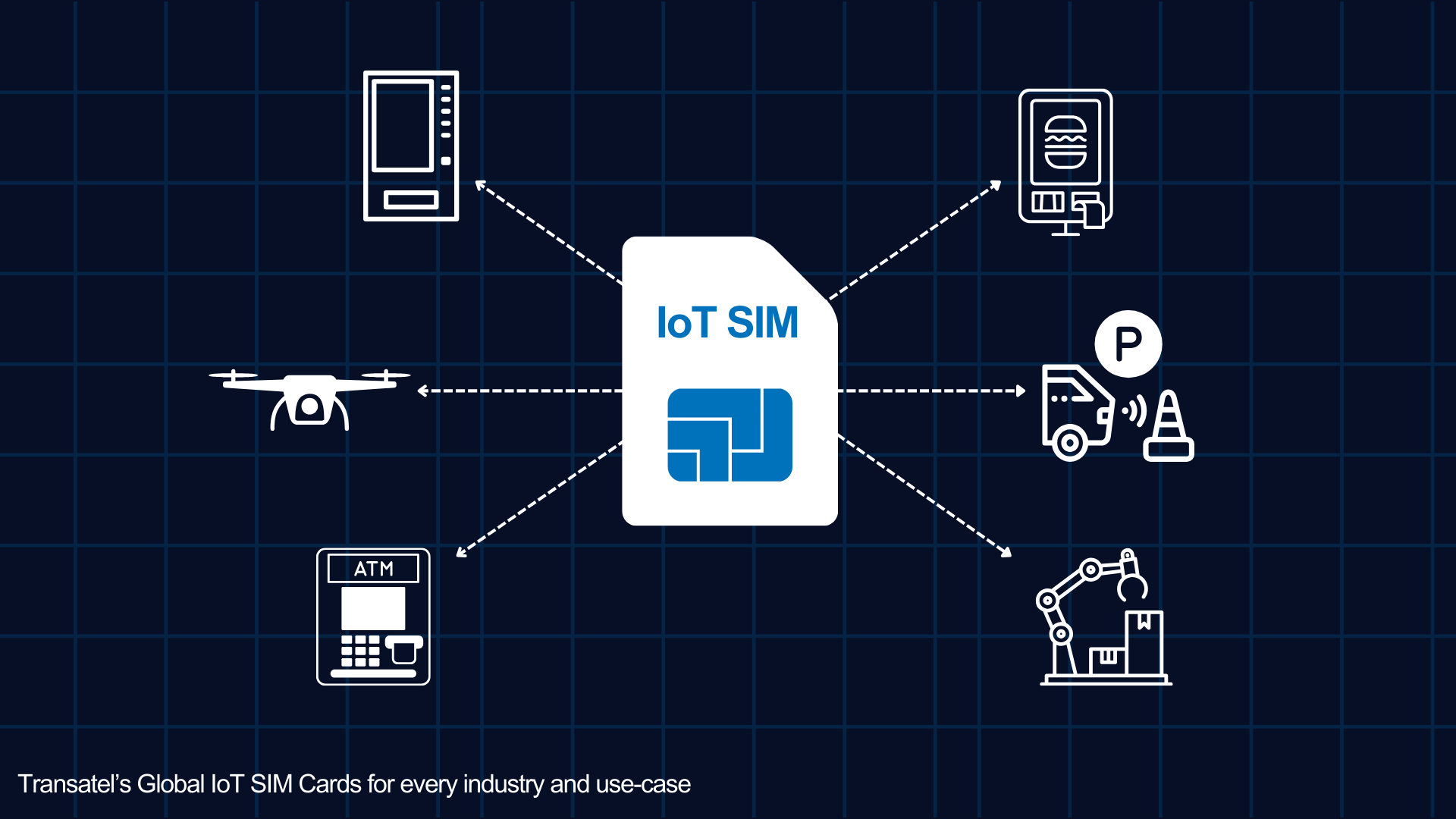
Test Transatel’s global connectivity platform, and seamlessly deploy your IoT fleets across 200+ countries & territories with one (e)SIM. Contact us for a FREE trial and see multi-network IoT connectivity in action.