Automotive
 Aviation
 Defense & Public Safety
 Manufacturing
 Logistics
 Public Transport
 Mobility
 Energy & Utilities
 Smart Farming
 Smart Buildings
 EV charging
 Healthcare
 Retail
 Media & entertainment

Autonomous mobile robots are becoming a cornerstone of modern industrial and logistics operations. But beyond robotics’ performance, the ability to deploy quickly, operate reliably, and scale across multiple sites is what ultimately determines success. This is precisely the challenge addressed by Forx, autonomous pallet‑handling robots designed for real‑world industrial environments – and where cellular multi‑operator connectivity plays a critical enabling role.
Designed and manufactured in France, Forx robots are already operating across a growing number of industrial sites, helping companies automate internal pallet movements while keeping deployment simple and operations resilient.
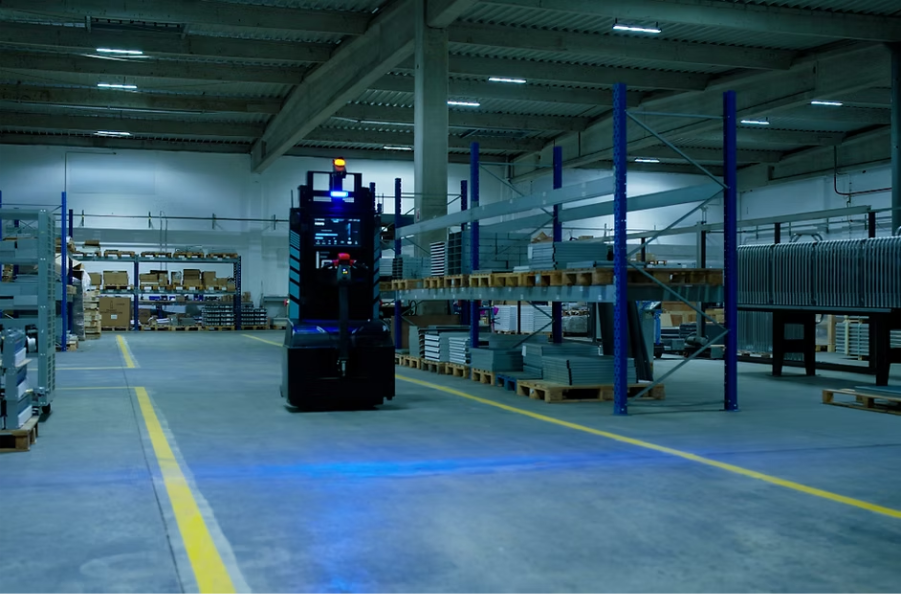
Automating pallet flows faster, without infrastructure constraints
FORX robots are built to automate repetitive pallet movements in warehouses and production facilities while operating safely alongside human operators. The solution focuses on one clear objective: making industrial automation usable immediately, without forcing customers to adapt their infrastructure.
Key characteristics of FORX deployments include:
- Commissioning on customer sites in 1 to 2 days
- No modification of physical infrastructure or IT networks
- A rental‑based model enabling progressive, risk‑free adoption
- Performance validation directly in real operating conditions
This pragmatic approach has already been translated into concrete results. Autonomous robots are deployed across dozens of industrial and logistics sites in France, including customers such as Eurostat, Daher, Sodepac, and SFS. These deployments show how automation can be introduced quickly, scaled gradually, and deliver measurable gains without operational disruption.
Beyond the robots themselves, Forx relies on a cloud‑based operating model that enables remote supervision, configuration, and support across all deployed sites.
Connectivity as a foundation for scalable autonomous operations
Instead of relying on customer Wi‑Fi networks, Forx robots connect directly to the cloud using cellular 4G/5G connectivity. Each robot integrates an industrial router and a multi‑operator SIM, allowing deployments to remain independent from local IT environments.
This approach brings several decisive advantages for operating autonomous robots at scale:
- Fast and repeatable deployments, without relying on customer network availability or approvals
- Consistent connectivity across heterogeneous industrial sites
- Remote access to robots for configuration, monitoring, and support
- Reduced operational complexity when expanding to new locations
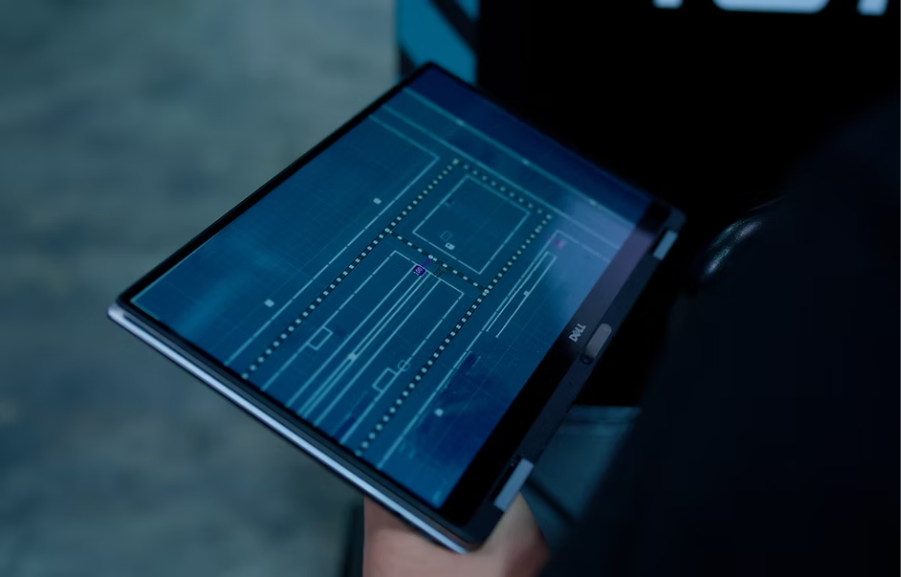
The use of multi‑operator connectivity further increases reliability by maximizing the likelihood that each site benefits from adequate network coverage, regardless of local conditions.
From an operational standpoint, Forx also benefits from data pooling, which allows data usage to be shared across the entire robot fleet. This is particularly valuable as robots do not all consume data in the same way or at the same time, enabling better cost control while maintaining predictable operations.
As Gérald Lelong, Co‑founder & CEO of Easymov Robotics, explains:
“With Transatel, we get a connectivity solution that just works across all our sites. Multi‑operator coverage and centralized management allow us to deploy robots faster, operate them remotely, and scale our fleet without having to worry about local network constraints.”
From the connectivity provider’s perspective, this use case highlights how cellular connectivity enables robotics scale‑up rather than limiting it.
As Cédric Jarkovsky, Head of IoT Product Management at Transatel, notes:
“Multi‑operator cellular connectivity removes one of the main barriers to scaling autonomous robotics. It allows fleets like Forx to be deployed faster, operated remotely, and expanded across sites without being constrained by local network conditions.”
Enabling autonomous logistics, today and tomorrow
The Forx story demonstrates how robotics and cellular connectivity work hand in hand to make industrial automation practical, scalable, and repeatable. By combining FORX’s autonomous robotics expertise with reliable, multi‑operator cellular connectivity, a deployment model has emerged that works in real‑world industrial conditions – today and at scale.
As autonomous logistics continues to grow, connectivity will remain a decisive enabler, and for FORX, it is a key foundation of long‑term scalability. Looking ahead, future robot generations are expected to integrate eSIM technology to further simplify hardware integration, increase robustness in industrial environments, and enable even more flexible connectivity management at scale – an evolution that aligns with Transatel’s vision for global IoT connectivity and forthcoming standards such as SGP.32, detailed in Transatel’s recent eSIM white paper.