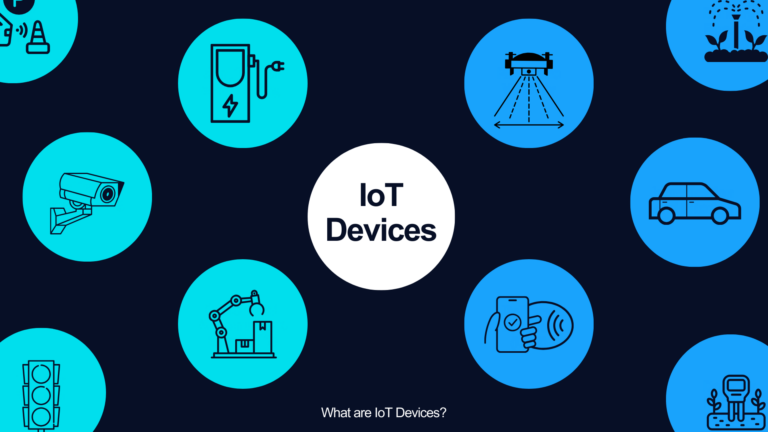
Automotive
 Aviation
 Defense & Public Safety
 Manufacturing
 Logistics
 Public Transport
 Mobility
 Energy & Utilities
 Smart Farming
 Smart Buildings
 EV charging
 Healthcare
 Retail
 Media & entertainment

When people hear “5G,” they often picture faster smartphones. In reality, the biggest difference stays behind the scenes in how networks are built and operated, and this is where 5G standalone comes in.
In simple terms, 5G standalone (5G SA) is a version of 5G where both the radio network and the core network are fully 5G, without relying on 4G LTE anchors. It is a natively 5G environment from end to end that enables capabilities like guaranteed latency, fine-grained quality of service, and network slicing that non standalone setups cannot deliver in the same way.
For IoT engineers, network architects, and product leaders, 5G standalone is not just another G in the cycle. It is a new way to design mobile infrastructure, closer to cloud-native IT than to classic telecom boxes, and it underpins the next decade of industrial, automotive, and mission critical connectivity.
From 5G non standalone to 5G standalone: the architectural leap
To understand why 5G standalone is so important, it helps to contrast it with the first wave of 5G deployments: 5G non standalone (5G NSA).
5G NSA essentially bolted a 5G radio layer on top of 4G/LTE core networks. This allowed operators to move quickly, reuse their 4G core, and offer higher throughput to users without rebuilding everything. For many consumer use cases, that was enough to market “5G” and deliver better speeds.
5G standalone removes that LTE crutch. In 5G SA, the control plane, user plane, policy functions, and subscriber management live in a dedicated 5G core that is built as a cloud-native, service-based architecture. Instead of relying heavily on rigid, hardware-centric network elements, operators can decompose the core into microservices that communicate over APIs and scale elastically.
| Dimension | 5G non standalone (NSA) | 5G standalone (SA) |
| Core Network | Anchored on 4G/LTE core | Dedicated 5G core with service-based architecture |
| Focus of early deployments | Faster mobile broadband | Industrial IoT, mission critical, advanced enterprise services |
| Latency and determinism | Improved vs 4G but limited by LTE core | Designed for low and predictable latency with flexible placement |
| Network slicing | Limited or pilot-grade | Native capability for commercial slices at scale |
| IoT suitability | Good for basic broadband IoT and legacy devices | Optimised for massive IoT, critical control, and differentiated QoS |
| Deployment model | Transitional architecture for short to medium term | Strategic, long-term foundation for 5G era networks |
Put differently, 5G SA transforms the mobile core into something that behaves more like a modern cloud platform. That shift is what enables features such as:
- Network slicing with isolation and tailored SLAs.
- Ultra-reliable low-latency communication (URLLC) for critical control applications.
- Native support for massive machine-type communication (mMTC).
- Advanced analytics, policy, and exposure APIs that partners can integrate with.
Key building blocks of 5G standalone
Under the hood, several technical elements make 5G SA different from its predecessors. You do not need to memorise every acronym, but understanding the building blocks helps you evaluate partners and architectures.
1. 5G Core (5GC)
The 5G core handles registration, mobility, session management, and policy enforcement. In 5G SA, it is fragmented into logical functions such as AMF, SMF, UPF, PCF, and others. These functions can be virtualised, scaled independently, and deployed across edge and central locations depending on latency needs.
2. Service-based architecture (SBA)
Instead of the traditional point-to-point signalling, 5G SA uses service-based interfaces where network functions expose services to each other over APIs. This is closer to a microservices model and enables more flexibility in how operators integrate third party systems, orchestration engines, and analytics.
3. Network Slicing
The network can be partitioned into multiple logical slices, each with its own performance, security, and policy profile. For example, a slice for latency-critical control traffic can run alongside a slice for bulk data within the same physical infrastructure, but with isolation between them.
4. QoS and policy control
5G SA brings more granular Quality of Service frameworks that allow operators to match traffic characteristics to specific QoS profiles. For IoT use cases, this is key to differentiating a temperature sensor reporting once an hour from an autonomous system requiring millisecond-level response times
5. Native support for massive IoT
5G SA is designed to support massive numbers of devices. Mechanisms such as efficient signaling, power-saving modes, and optimized random access procedures help keep the network stable even when millions of IoT endpoints are connected.
5G Standalone real-world use cases across industries:

To make these capabilities concrete, consider several industry patterns where 5G standalone is emerging as a catalyst. These are deliberately different from generic smartphone stories and instead focus on IoT and B2B scenarios.
1. Smart manufacturing and industrial automation
In a modern plant, different applications have very different connectivity needs. A quality inspection camera streaming high resolution images, an AGV navigating a warehouse, and a safety system monitoring critical thresholds do not belong on the same undifferentiated pipe.
With 5G SA, an industrial site can run a dedicated slice for motion control and safety-related traffic with strict latency requirements, while running another slice for non critical data collection and maintenance logs. The plant operator can connect robots, sensors, and control systems over private or hybrid networks, while maintaining deterministic behavior where it is required and bandwidth where it is useful.
2. Connected mobility and smart logistics
In connected mobility, vehicles and assets move across borders, radio conditions, and network operators. A truck that carries high value cargo and streams telemetry, diagnostics, and driver assistance data must remain connected even when it leaves dense urban coverage or crosses national boundaries.
5G standalone cores that support both public and private network integration, combined with multi-network SIMs and intelligent steering, allow connectivity providers to offer consistent service levels over wide geographies. Applications such as real time condition monitoring of trailers, adaptive routing based on live data, and remote diagnostics become practical at scale, as the network can prioritise critical telemetry over bulk data like media or software downloads.
3. Energy and utilities
Power grids, pipelines, and distributed energy resources increasingly rely on digital control and sensing. Many of these assets live in challenging environments where fixed connectivity is not viable, yet the operational impact of failures is high.
5G SA can support secure, isolated slices dedicated to operational technology traffic, separate from general IT or consumer use. With appropriate architecture and policy, utilities can run time critical protection signals, slower supervisory control, and non critical analytics within the same 5G footprint but with clear boundaries and differentiated performance. This supports more granular visibility and control without compromising resilience.
How can enterprises adopt 5G standalone?
For enterprises building IoT products or services, the question is not only “what is 5G standalone” but “how do we practically adopt it, across countries and use cases, without fragmenting our architecture.”
Global cellular IoT connectivity provider like Transatel operates its fully owned core network and manages hundreds of roaming and local access agreements can abstract much of that complexity. Our global connectivity platform can:
- Offer multi-network connectivity (2G to 5G, LTE-M, and beyond) across 200+ countries & territories under a single integration and contract, so you can start with what is available and progressively activate 5G SA features as coverage expands.
- Provide advanced connectivity management platforms that expose APIs for SIM lifecycle, policy, and traffic steering, allowing you to align network behaviour with your application logic.
- Extend connectivity into private and hybrid environments so devices can move between public and private 5G SA domains while maintaining identity and security controls.
- Integrate additional access types such as non-terrestrial networks where needed, creating a more resilient fabric of coverage for mobile or remote assets.
- This kind of partner-centric approach allows you to treat 5G SA as a capability you can turn on where it makes sense, rather than as an isolated project or a bet on a single local operator footprint.
Pitfalls to avoid while building a 5G Standalone strategy
If you are planning or refreshing your IoT connectivity strategy, 5G standalone should not be an abstract topic. It should feature explicitly in your product and network roadmaps. Concrete next steps include:
- Mapping your existing and future use cases to latency, reliability, and QoS needs, identifying where 5G SA features are truly required and where LTE or LTE-M remain sufficient.
- Reviewing device and module choices to ensure that the hardware you deploy in the coming years can support 5G SA where it is available, without sacrificing current coverage.
- Evaluating connectivity partners not only on price and coverage, but on their 5G SA readiness, their ability to operate their own core, and the maturity of their connectivity management platforms.
- Designing for hybrid scenarios where public, private, and possibly non terrestrial networks coexist, so that your architecture remains flexible as the 5G SA ecosystem evolves.
Editor’s final thoughts:
5G standalone is rapidly becoming the reference architecture for advanced IoT and enterprise connectivity, but every project has its own constraints, legacy choices, and timelines. Translating the high-level promise into a realistic, risk-aware deployment plan requires hands-on experience with both telecom and global IoT rollouts.
If you are evaluating how 5G standalone fits into your IoT strategy, network architecture, or product roadmap, now is the right moment to talk to specialists who design and operate cellular IoT connectivity at scale.
Book a FREE meeting with Transatel’s 5G and IoT experts to review your use cases, challenge your assumptions, and build a connectivity roadmap that can evolve from today’s networks to full 5G standalone without disrupting your business.