Automotive
 Aviation
 Defense & Public Safety
 Manufacturing
 Logistics
 Public Transport
 Mobility
 Energy & Utilities
 Smart Farming
 Smart Buildings
 EV charging
 Healthcare
 Retail
 Media & entertainment

As electric vehicles (EVs) become mainstream, energy efficiency management plays a pivotal role. EV charging stations experience challenges such as fluctuating energy demand, grid instability, and connectivity disruptions that risk downtime and user dissatisfaction.
This article explores how seamless IoT connectivity transforms smart charging networks enabling optimized energy consumption, load balancing, and maintaining grid stability. We also look at how Transatel’s global multi-network (e)SIMs enable seamless, reliable operations across borders, ensuring uninterrupted energy management.
What is energy management in EV charging and why is it important?
Energy management in EV charging involves real-time monitoring of energy usage, controlling charging rates, and optimizing power distribution to balance demand and supply. It ensures that charging stations operate efficiently without overloading the grid or causing unnecessary energy waste. This includes integrating energy sources and leveraging smart algorithms to adapt to charging based on grid conditions and user requirements.
Modern charging infrastructure relies on interoperable standards such as the Open Charge Point Protocol (OCPP), which enables chargers to exchange real-time status, energy, and control data with centralized platforms. This interoperability is essential for implementing smart algorithms that adapt charging behavior based on grid conditions, energy pricing, and operational priorities.
As EV adoption accelerates, operators must also manage increasing complexity driven by renewable energy variability and tighter grid requirements. Advanced energy management systems, supported by continuous connectivity, are therefore becoming a foundational requirement rather than an optional enhancement.
How does load balancing and demand response function in the EV charging ecosystem?
- Load balancing dynamically distributes the energy load across multiple charging stations to avoid exceeding grid capacity.
- Demand response involves adjusting charging patterns in response to grid signals, such as reducing load during peak hours. This requires low-latency connectivity to receive and execute grid instructions in real time, helping operators avoid non-compliance and potential financial penalties.
- Vehicle-to-Grid (V2G) enables EVs to send stored energy back to the grid during periods of high demand. This transform charging infrastructure into an active grid asset and increases the need for reliable, real-time connectivity to manage bidirectional energy flows safely and efficiently.
- Together, these techniques optimize energy usage, prevent blackouts, and enable integration of renewable energy sources.
Why is IoT connectivity critical for energy management and grid stability?
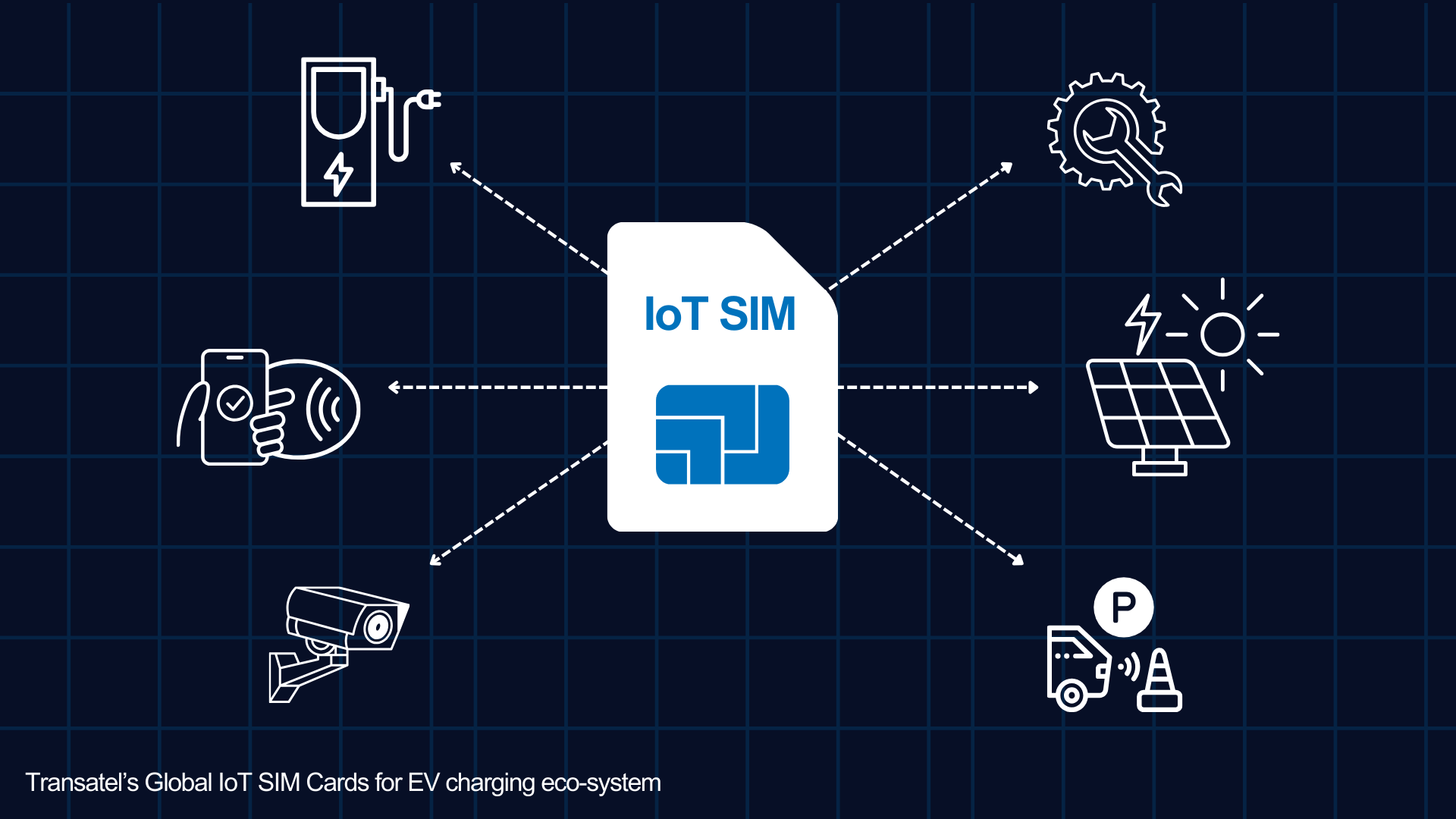
Reliable IoT connectivity like Transatel’s supports effective energy management and grid stability in EV charging networks. It enables real-time data transmission between charging stations, energy meters, and centralized control platforms. Cellular connectivity also improves security by isolating EV chargers from the site’s local IT network, reducing exposure compared to Wi-Fi-based connections.
Our auto-switching multi-network connectivity ensures uninterrupted global operations across 200+ countries & territories, allowing operators to monitor energy consumption, control charging remotely, and plan effective operations.
How does Transatel support efficient energy management for EV charging systems?
Transatel offers a global connectivity solution combining multi-network SIMs with a ‘single-pane-of-glass’ connectivity management platform, tailored for EV charging operators. Our IoT SIMs provide seamless cross-border connectivity by automatically switching to the best available network, ensuring continuous data transmission and control.
In a rapidly growing EV market, seamless energy management and reliable IoT connectivity are non-negotiable for charging network success. Transatel’s global multi-network connectivity enables operators to overcome connectivity challenges and optimize energy use globally.