Automotive
 Aviation
 Defense & Public Safety
 Manufacturing
 Logistics
 Public Transport
 Mobility
 Energy & Utilities
 Smart Farming
 Smart Buildings
 EV charging
 Healthcare
 Retail
 Media & entertainment

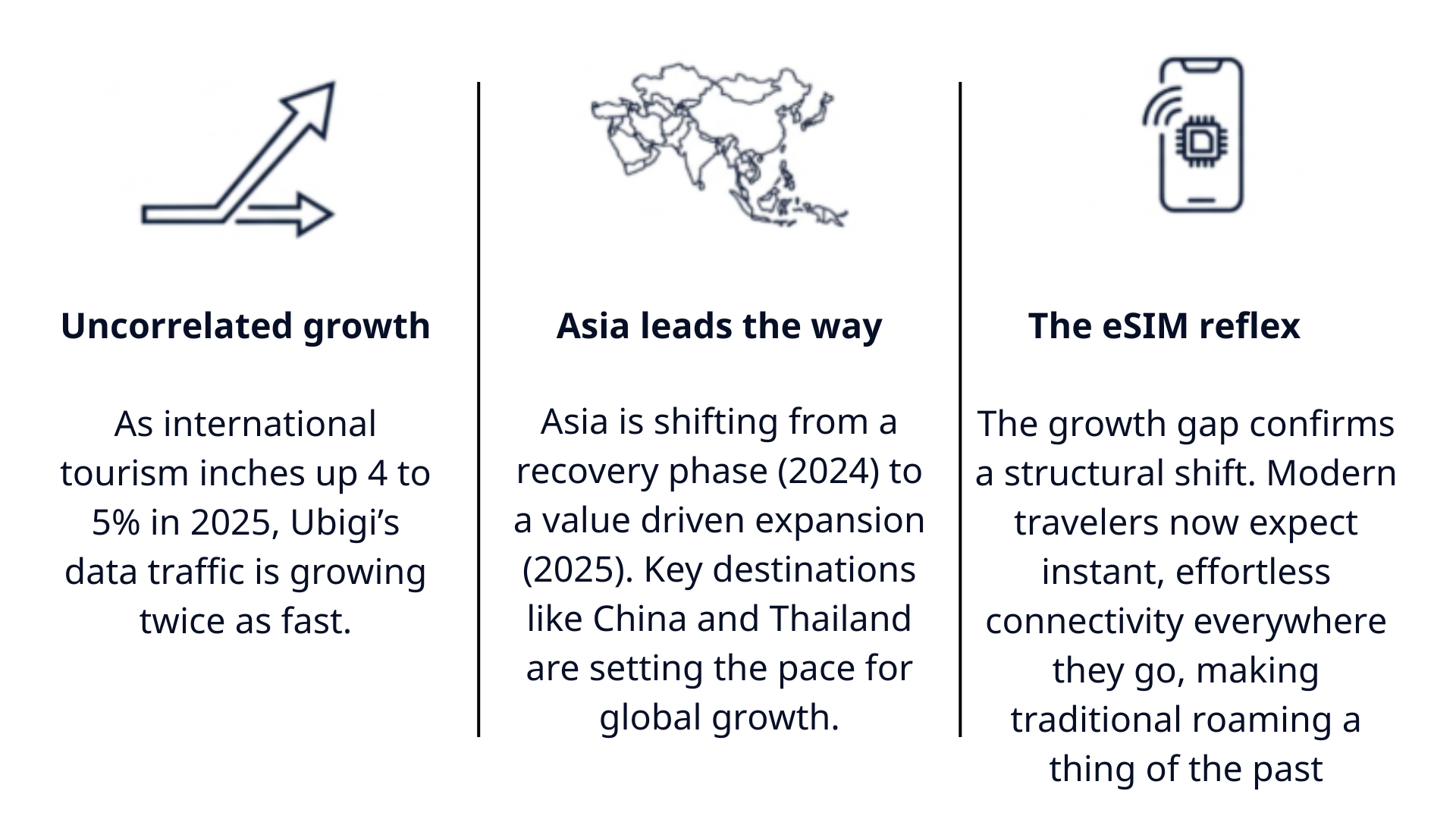
With travel on the rise, new data reveals how modern adventurers are leveraging connective technologies to streamline their travel experience. eSIM usage data from Ubigi, a global eSIM provider and a Transatel brand, reveals that global eSIM data traffic and new Ubigi users increased by 50% from 2024 to 2025. This significant growth in the number of connected travellers coincides with global international travel growing by 4%, according to UN Tourism, within the same period. This number represents approximately 1.5 billion travellers, who are leveraging connectivity to empower their travel experience to emerging global destination hotspots.
Exploring the World, Without Losing Signal
A closer look at the data from Ubigi users tells a deeper story of how for the modern traveler, connectivity isn’t optional – it is a necessity for travel. Whether you’re scanning boarding passes on a mobile app or using translation tools while abroad, connectivity is the backbone behind many convenient travel solutions and safety. Notably, a recent Ipsos survey commissioned by Ubigi found that 64% eSIM users choose an eSIM to stay connected with friends and family while abroad. Other top travel eSIM uses revealed by the survey include:
· Sharing your travel experience – 55% leverage data to post on social media or share travel photos.
· Finding your way – 53% take advantage of geolocation services like maps or GPS.
· Manage travel logistics – 49% book rides, hotels and tickets.
· Remote work – 46% seamlessly connected for work-related uses such as emails, video calls and conferences.
Asia Cements Itself as a Clear Favorite Among Ubigi Users
Destinations across Asia remain among the most popular choices for Ubigi users, with Japan continuing to lead eSIM usage. Travelers from the United States show particularly strong interest in Japan compared to other regions. Beyond Japan, favorite destinations among global Ubigi users include South Korea, Vietnam, Indonesia, the Philippines, China, Malaysia, and Thailand. According to Ubigi’s 2025 usage data, both China and Thailand saw remarkable year-over-year growth, highlighting their rising appeal among international travelers
The appeal of Japan for international travelers has remained consistent since 2023 but what are the factors fueling the sudden growth across Asia?
Asia’s Momentum After the 2024 Catch-Up Year
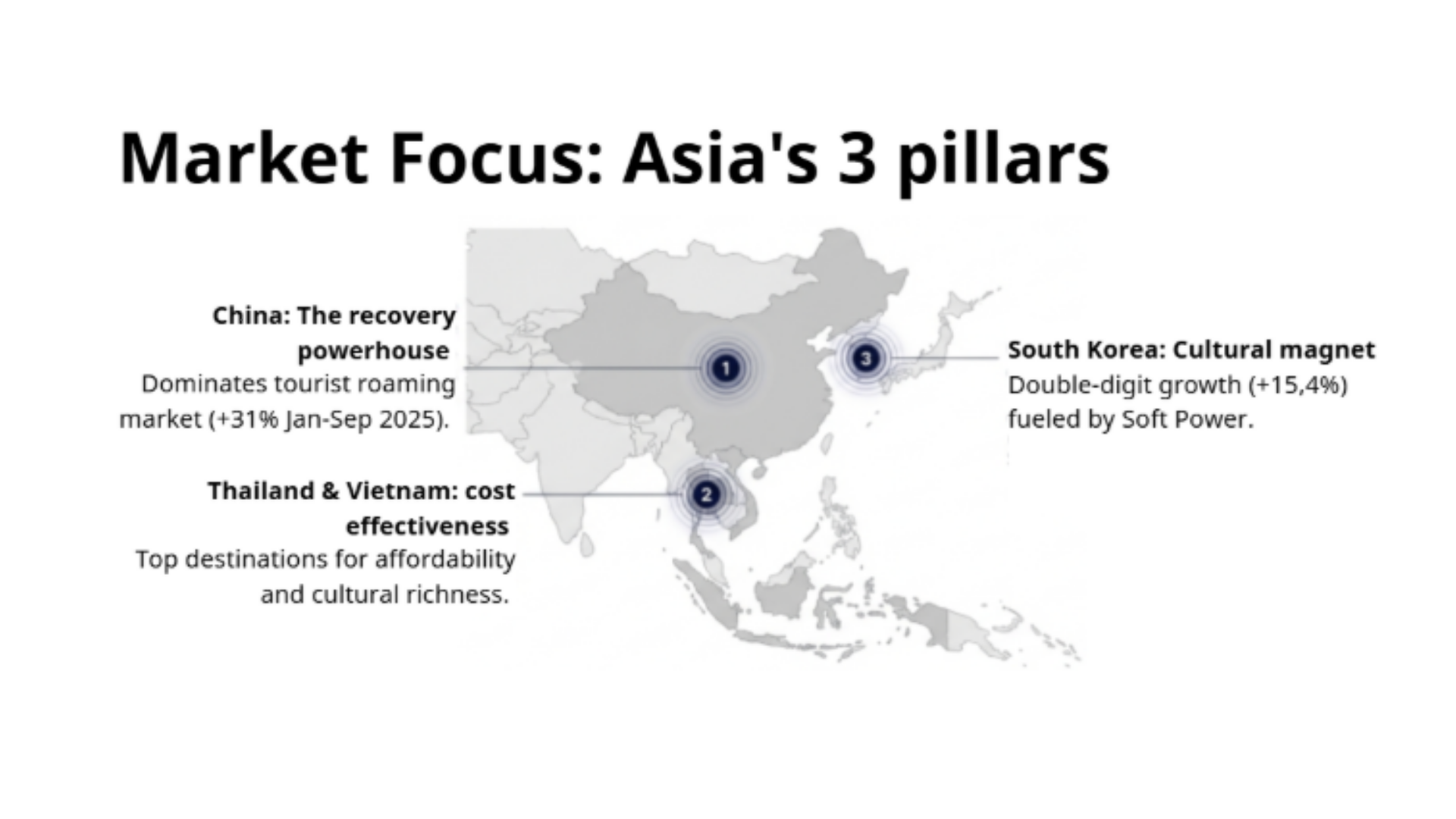
According to the Pacific Asia Travel Association (PATA), China saw one of the fastest tourism revenue growth rates in 2025. South Korea recorded double-digit growth in arrivals and tourism spending, fueled by cultural appeal and improved air connectivity. For Southeast Asia, growth can largely be attributed to its strong value-for-money positioning, especially in destinations like Thailand, Vietnam, Malaysia, and the Philippines. This aligns with Ubigi usage data for U.S. travelers with South Korea, Taiwan, Vietnam, the Philippines, China, Thailand, and Indonesia emerging as top choices for travel given the current strength of U.S. currency in Southeast Asia.
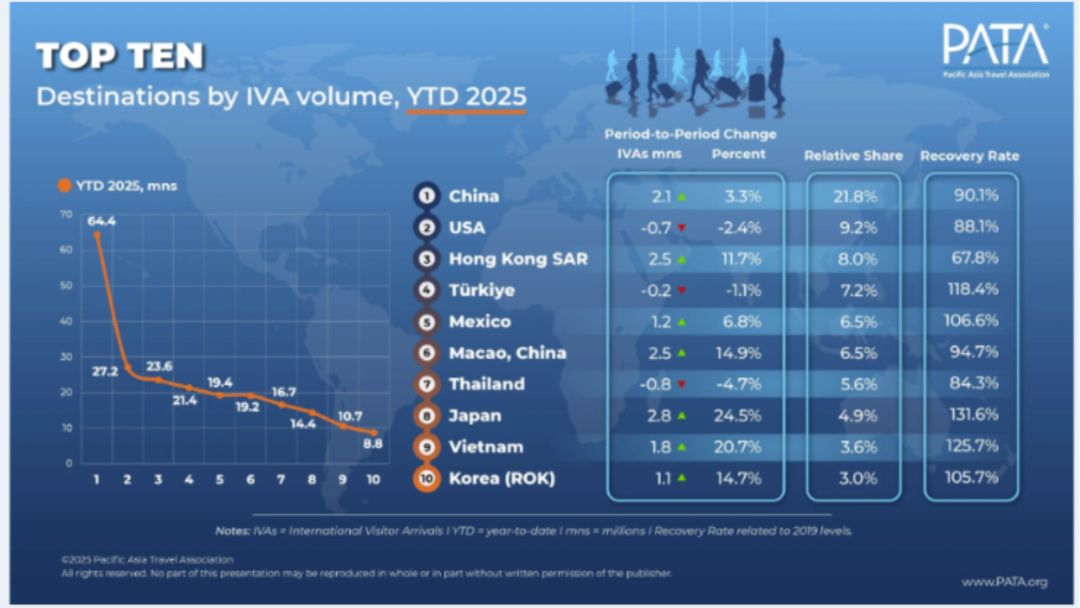
Asia’s strong rebound from the pandemic can also be attributed to restored flight networks, more flexible visa policies, and travel costs that tend to be more affordable than in Europe or the United States. Ubigi’s data also shows that travelers are gradually turning away from destinations impacted by changing visa regulations.
Why Asia Is a Natural Fit for Travel eSIMs
Beyond tourism numbers, Asia checks off many boxes that make eSIM usage appealing for international travelers. For example, multi-country itineraries are quite common as travelers typically bundle multiple countries as part of their adventure within Southeast Asia. Regional eSIMs remove the hassle of switching multiple physical SIM cards to remain connected throughout their journey. Geographically, Southeast Asia has made significant improvements to their cellular coverage, providing strong 4G and 5G coverage in urban and tourist areas that supports data-heavy use cases like maps, ride-hailing apps, social media, and video.
2024 vs. 2025: What It Really Tells Us
Following a year of strong recovery in 2024, as destinations reopened and travel demand surged, 2025 marks a transition to a “new normal.” Growth has become more stable, driven by higher travel volumes and by travelers placing greater emphasis on value, convenience, and overall experience.
Against this backdrop, Ubigi eSIM usage data shows that connectivity has become a core part of modern travel. The fact that Ubigi’s client base and traffic are growing far faster than global tourism confirms one thing: staying connected everywhere, easily and without surprises, is no longer a nice-to-have – it is an expectation for international travelers. To ensure you’re connected for your next adventure, check out Ubigi’s eSIM for travel.