Automotive
 Aviation
 Defense & Public Safety
 Manufacturing
 Logistics
 Public Transport
 Mobility
 Energy & Utilities
 Smart Farming
 Smart Buildings
 EV charging
 Healthcare
 Retail
 Media & entertainment

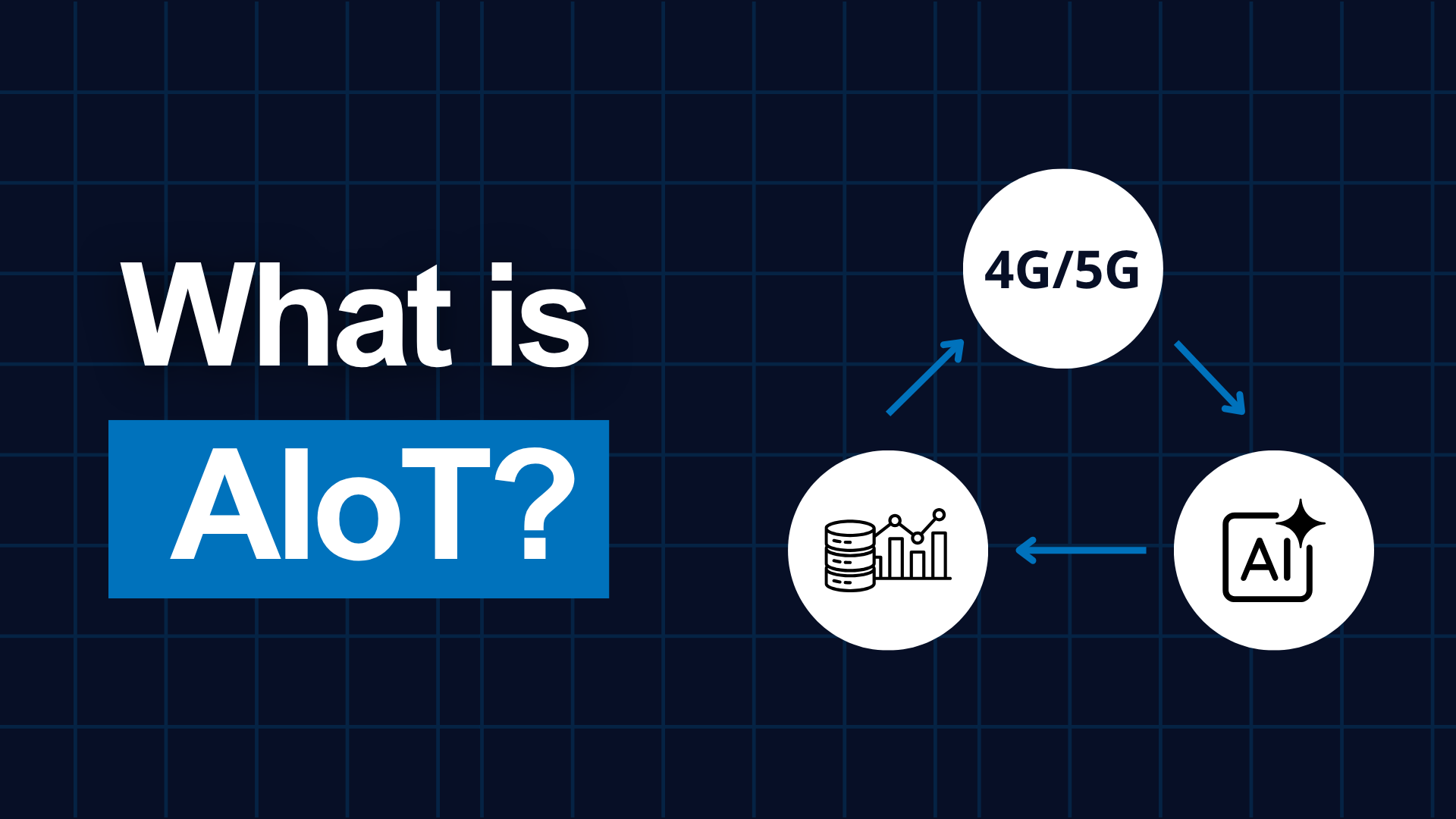
The Internet of Things (IoT) is a network of physical devices that use sensors, connectivity, and software to collect data, share it, and trigger actions without needing constant human input.
In a Texas oilfield, sensors on drilling rigs track vibration and temperature in real time, alerting teams to maintenance needs before downtime costs millions. Across a Brazilian mining operation, connected trucks relay load data and route optimizations to central systems, cutting fuel use by coordinating fleets over vast terrain. These setups rely on the Internet of Things (IoT) to turn raw equipment data into actionable steps.
Internet of Things (IoT) definition
The Internet of Things refers to physical devices equipped with sensors, software, and connectivity that link to networks, allowing them to send and receive data without human input. Think of it as giving machines a voice: a simple sensor detects changes, like soil moisture in agriculture, and shares that info over cellular or Wi-Fi to trigger irrigation pumps automatically.
This setup differs from traditional computing. Devices here operate independently, often in remote spots, using low-power protocols to stay online for years on a single battery. For a context, imagine your fitness tracker pinging your phone with heart rate stats; scale that to factory floors where hundreds of units report status continuously. Core to this is reliable network access, spanning 2G for legacy gear, up to 5G for high-speed analytics.
How Internet of Things evolved from early networks
IoT traces back to 1999, when Kevin Ashton coined the term at Procter & Gamble to describe RFID tags tracking supply chains. Early systems built on Machine-to-Machine communication, where devices like vending machines messaged restock needs via basic modems. By 2010, smartphones and cheap sensors accelerated adoption, shifting from wired setups to wireless ones.
The 2020s brought cellular upgrades: 4G enabled reliable video from security cameras, while 5G now handles massive device densities with low latency. Today, hybrid networks blend satellite for remote areas and LTE-M for low-power needs. This progression turned fragmented pilots into global deployments connecting over 15 billion devices.
Core components of IoT systems
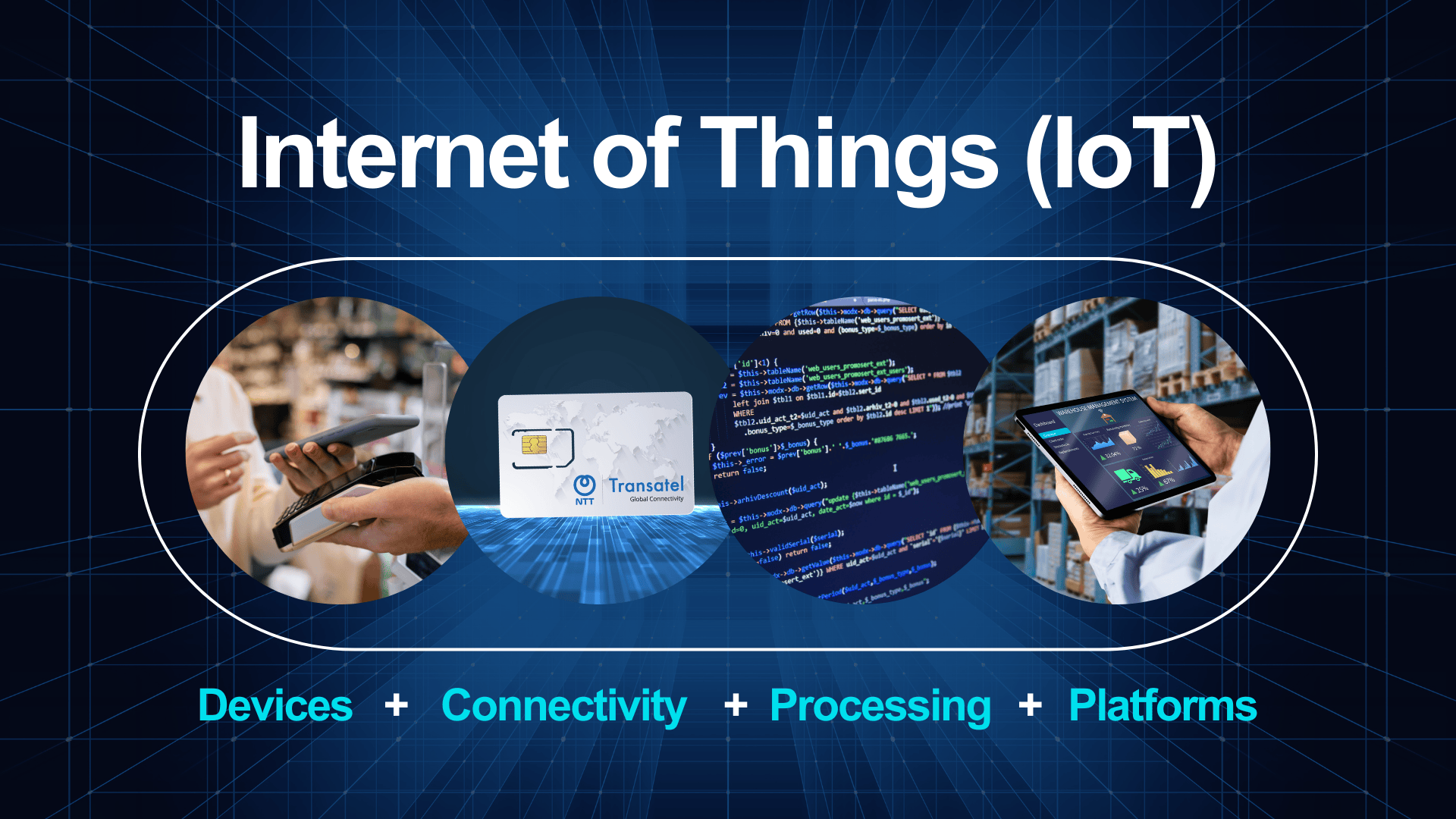
Every IoT deployment rests on four building blocks: devices, connectivity, data processing, and management platforms. Devices include sensors for temperature, GPS trackers for location, or cameras for visual monitoring, built rugged for harsh environments like construction sites.
Connectivity bridges these to the cloud, favoring cellular options such as LTE-M for battery efficiency or 5G for low latency in video feeds. Data processing happens at the edge, near the device, to filter noise before cloud analysis predicts failures. Connectivity management platforms oversee it all, tracking SIM usage, roaming across 200+ countries & territories, and enforcing security policies.
| Component | Role | Example Tech | Benefit |
| Devices | Collect data | Sensors, actuators | Real-time monitoring |
| Connectivity | Transmit data | LTE-M, 5G, eSIM | Global coverage without gaps |
| Processing | Analyze data | Edge computing, cloud | Faster decisions, less bandwidth |
| Platforms | Manage fleets | SIM portals, APIs | Cost control, diagnostics |
Internet of things (IoT) across industries
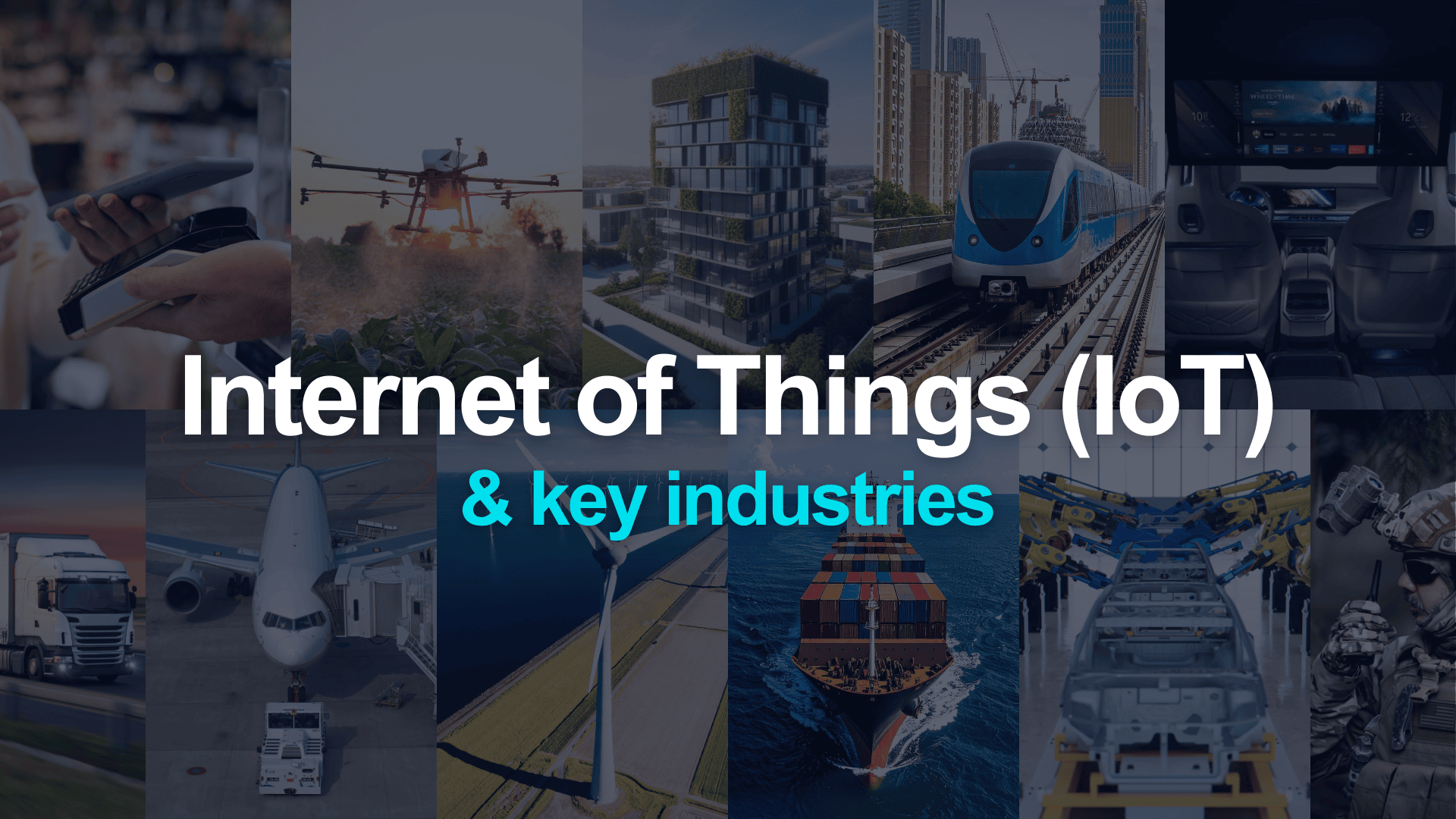
| Industry | Device Examples | Connectivity Needs | Benefits |
| Automotive | Fleet trackers, onboard diagnostics | Global 4G/5G roaming, low latency | Route optimization, predictive maintenance |
| Aviation | Aircraft telemetry units, baggage trackers, ground equipment sensors | Multi-network global connectivity, low-latency data transfer | Predictive maintenance, real-time aircraft monitoring |
| Energy | Wearables, drill monitors | Remote LTE-M, high uptime | Safety alerts, equipment health |
| Agriculture | Soil sensors, drones | Cellular connectivity, weather-resistant | Yield boosts, water savings |
| Utilities | Smart meters, grid sensors | Deep coverage, secure data | Accurate billing, outage detection |
| Logistics | Container tags, forklift cams | Multi-network, edge processing | Theft prevention, inventory accuracy |
How Internet of Things (IoT) architecture works
Devices form the base layer, collecting data on variables like location or humidity. Gateways aggregate this input and route it to edge servers or clouds for processing. Protocols such as MQTT handle efficient, lightweight communication between nodes.
In practice, a single SIM/eSIM manages network handoffs seamlessly, switching from 4G to 5G without interrupting service. Management platforms track usage, diagnose issues remotely, and scale fleets from thousands to millions of units. This architecture supports hybrid public-private networks, balancing cost and performance.
Cloud integration adds analytics: machine learning spots patterns, like unusual energy spikes in a fleet of generators. Developers access these via APIs, enabling custom dashboards for oversight. Reliability comes from redundant paths, ensuring uptime even during carrier outages.
Evolution of IoT connectivity
- Early systems used 2G for basic metering, sufficient for infrequent updates
- 3G brought faster speeds for video feeds from security cameras
- 4G enabled real-time tracking in logistics, handling gigabytes of data monthly
- LTE-M and NB-IoT emerged for battery-constrained devices, lasting years on a single charge
- 5G Standalone now delivers ultra-low latency under 10 milliseconds, vital for robotics coordination
- Non-terrestrial options like satellite fill coverage gaps in oceans or deserts, partnering with cellular for hybrid reach
Global connectivity providers like Transatel negotiate direct access with hundreds of network carriers, bypassing roaming fees. For businesses, this cuts costs by 30-50 percent while maintaining quality of service agreements for uptime up to 99.9%.
Key technologies enabling Internet of Things
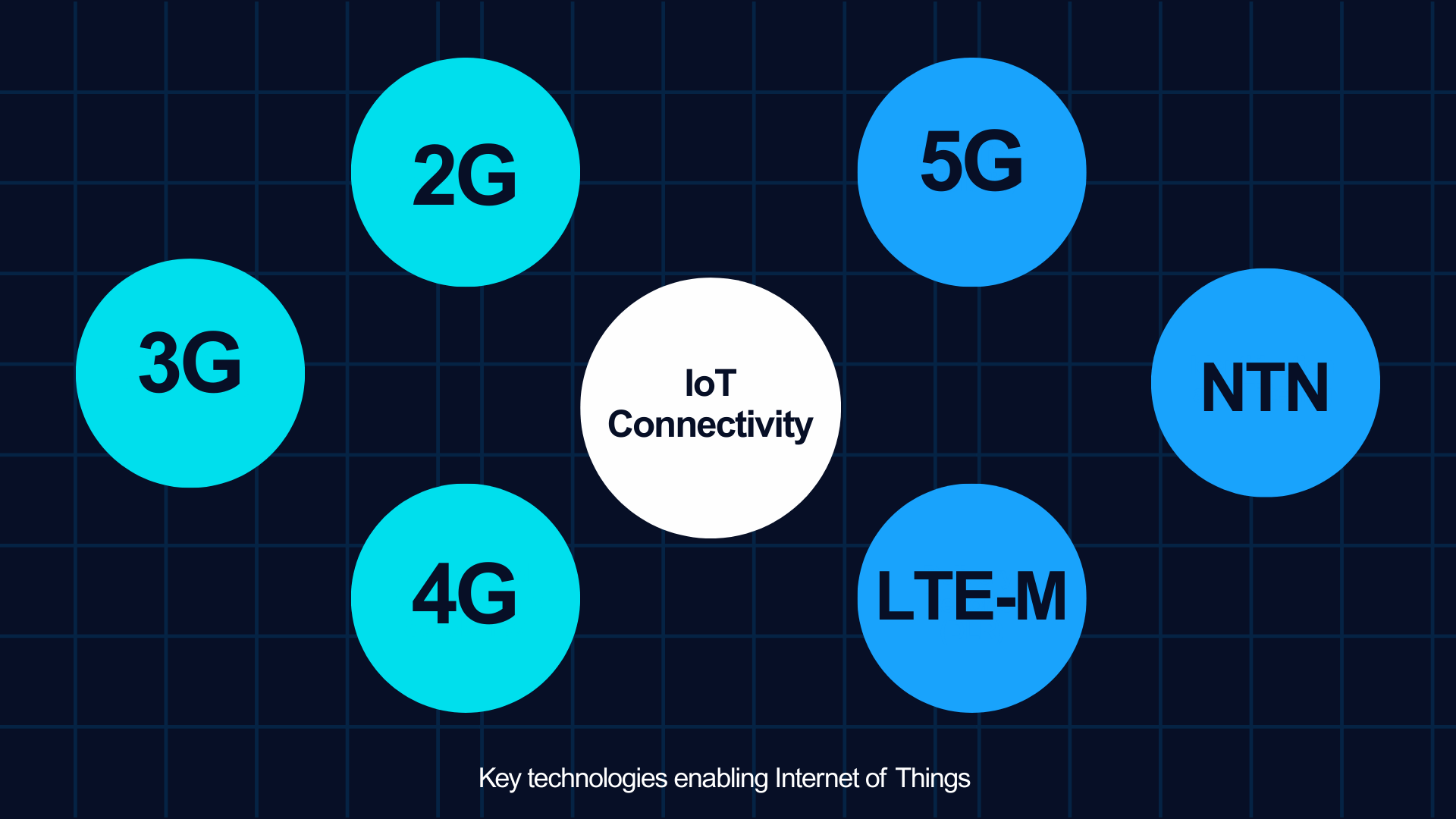
(e)SIM technology stands out, embedding profiles that activate across networks without physical swaps. A profile downloads over-the-air, adapting to local 5G bands instantly. This suits global deployments where devices ship from factories to varied markets.
Edge computing processes data near the source, reducing latency from 100ms to under 5ms. Containers run analytics on gateways, easing cloud loads. Blockchain secures chains of custody, verifying data integrity from sensor to dashboard.
5G slicing allocates virtual networks per use case: one slice for video surveillance, another for sensor polling. AI optimises these dynamically, prioritising critical traffic during peaks.
| Technology | Use Case Fit | Network Support | Battery Impact | Latency |
| 2G/3G | Basic tracking | Global fallback | Low drain | 200ms+ |
| LTE-M | Meters, sensors | Low-power wide area | Years | 20-50ms |
| 4G | Video, telematics | Urban fleets | Months | 30ms |
| 5G SA | Robotics, AR | High throughput | Optimised | <10ms |
| Satellite | Remote assets | Coverage gaps | Moderate | 600ms |
Challenges in scaling IoT deployments
Interoperability stalls progress: devices from different vendors speak varied protocols. Standardisation bodies like oneM2M unify interfaces, but legacy mixes persist. Battery life limits remote sensors; low-power modes help, yet cold chains demand trade-offs.
Data volumes overwhelm: a 10,000-unit fleet generates terabytes daily. Compression and edge filtering cut 70 percent of noise. Cost models shift with volume; per-SIM fees drop at scale, but upfront provisioning adds hurdles.
Regulatory hurdles vary: spectrum auctions dictate 5G access, privacy laws like GDPR restrict flows. Skilled talent gaps slow integration; platforms with APIs bridge this for non-experts. EU mandates CEREDi for CE marking. Solutions involve modular platforms with API-first design, easing custom fits.
Editor’s final thoughts:
For over two decades, Transatel has been operating as a global IoT connectivity provider, giving device makers and enterprises a seamless way to connect, manage, and scale IoT devices across countries and networks. Instead of dealing with a patchwork of local operators and SIM fleets, customers work with a unified platform that:
- Provides cellular IoT coverage across 200+ countries & territories through a single commercial and technical relationship.
- Supports embedded SIM (eSIM) and advanced profile management, reducing logistics and allowing remote provisioning at scale.
- Offers APIs and portals for activation, monitoring, and control of IoT devices, so operations teams can see what is happening on the network in real time.
- Integrates with existing IT and cloud environments, helping organisations route device data securely to where it creates value.
To move from theory to practice, test Transatel’s global IoT connectivity platform with your next proof of concept and evaluate how it supports the types of IoT devices and use-cases that matter most to your business.