Automotive
 Aviation
 Defense & Public Safety
 Manufacturing
 Logistics
 Public Transport
 Mobility
 Energy & Utilities
 Smart Farming
 Smart Buildings
 EV charging
 Healthcare
 Retail
 Media & entertainment
Imagine a city where every sensor, substation, and control centre communicates in real time without interruption, congestion, or risk of cyber intrusion. This is not a distant vision but a tangible reality made possible by Private 5G networks – dedicated cellular infrastructures designed to deliver secure, reliable, and sovereign connectivity for industrial and municipal operations.
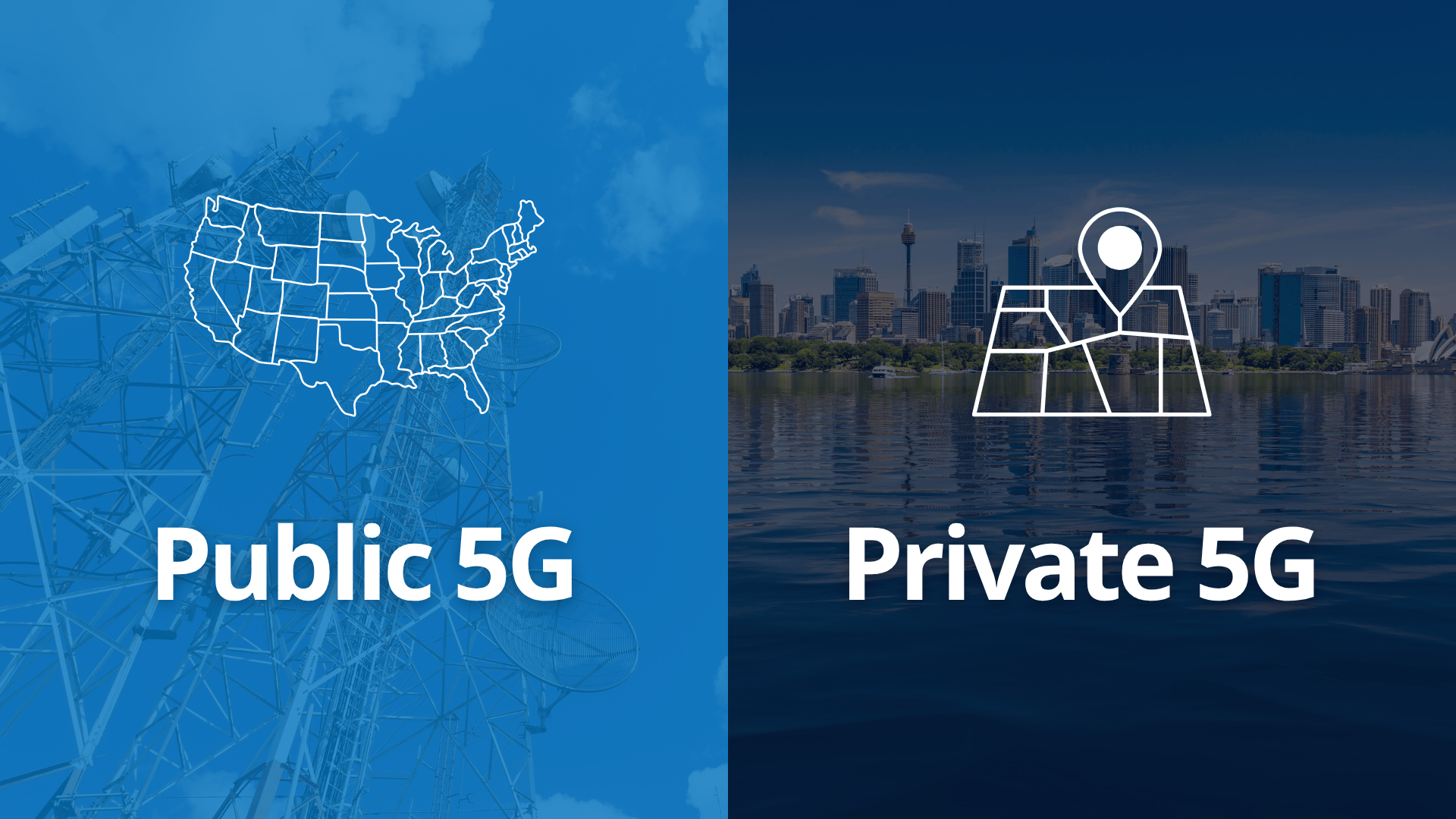
A Private 5G network is a cellular network built for the exclusive use of one organisation. Unlike a public 5G network shared with millions of users, a private one operates on dedicated radio resources, managed and controlled entirely by the enterprise or authority that owns it. This model brings performance predictability, airtight security, and localised data control far beyond what public networks can guarantee.
Why private 5G matters for the modern world
Cities and industries are becoming data ecosystems. Every second, utilities balance power loads, factories calibrate machinery, ports track freight, and hospitals sync life‑critical data. These operations depend on ultra‑reliable communication and latency measured in milliseconds.
Public mobile networks, despite their breadth, are built for consumers first. They optimise for coverage, not necessarily for deterministic performance or isolation. For critical infrastructure, even a small lag or exposure can have cascading effects. Private 5G changes this equation by offering:
- Exclusive control over network parameters, users, and quality of service
- Customised security tailored to operational technology (OT) environments
- Guaranteed performance through dedicated bandwidth and local compute integration
- Edge processing capabilities that keep data close to where it is generated
Together, these attributes make Private 5G one of the most strategic enablers of digital transformation in the 5G era.
Public 5G vs Private 5G network
| Dimension | Public 5G Network | Private 5G Network |
| Ownership | Managed by mobile operator | Owned or controlled by enterprise or municipality |
| Data Control | Resides with operator core and cloud | Remains within local premises or private cloud |
| Security | Shared infrastructure, multi‑tenant | Dedicated, isolated, and air‑gapped |
| Performance | Best‑effort QoS, susceptible to congestion | Deterministic latency and bandwidth |
| Use case focus | Consumer and enterprise broadband | Critical industry, IoT, and edge intelligence |
Public Wi‑Fi vs Private 5G
| Aspect | Public Wifi | Private 5G |
| Ownership | Shared by many users and usually managed by a venue or provider | Dedicated to one organisation |
| Access control | Usually open or password-based | SIM or eSIM-based authentication with stricter device control |
| Security | More exposed because it is shared and easier to intercept or misuse | More isolated, with tighter network control and a smaller attack surface |
| Performance | Can slow down quickly when many people connect | More consistent performance, especially under heavy device density |
| Mobility | Good for short-range indoor use, but roaming can be less seamless | Better for moving assets like AGVs, robots, vehicles, and equipment |
| Coverage | Works well in limited indoor spaces | Better for larger sites, campuses, factories, ports, and outdoor areas |
| Latency | Can vary depending on interference and congestion | Lower and more predictable latency |
| Scalability | Good for general connectivity, but can become crowded | Better suited to high-density industrial and mission-critical environments |
| Best for | Offices, cafes, guest access, light enterprise use | Smart factories, logistics, utilities, campuses, transport hubs, and critical infrastructure |
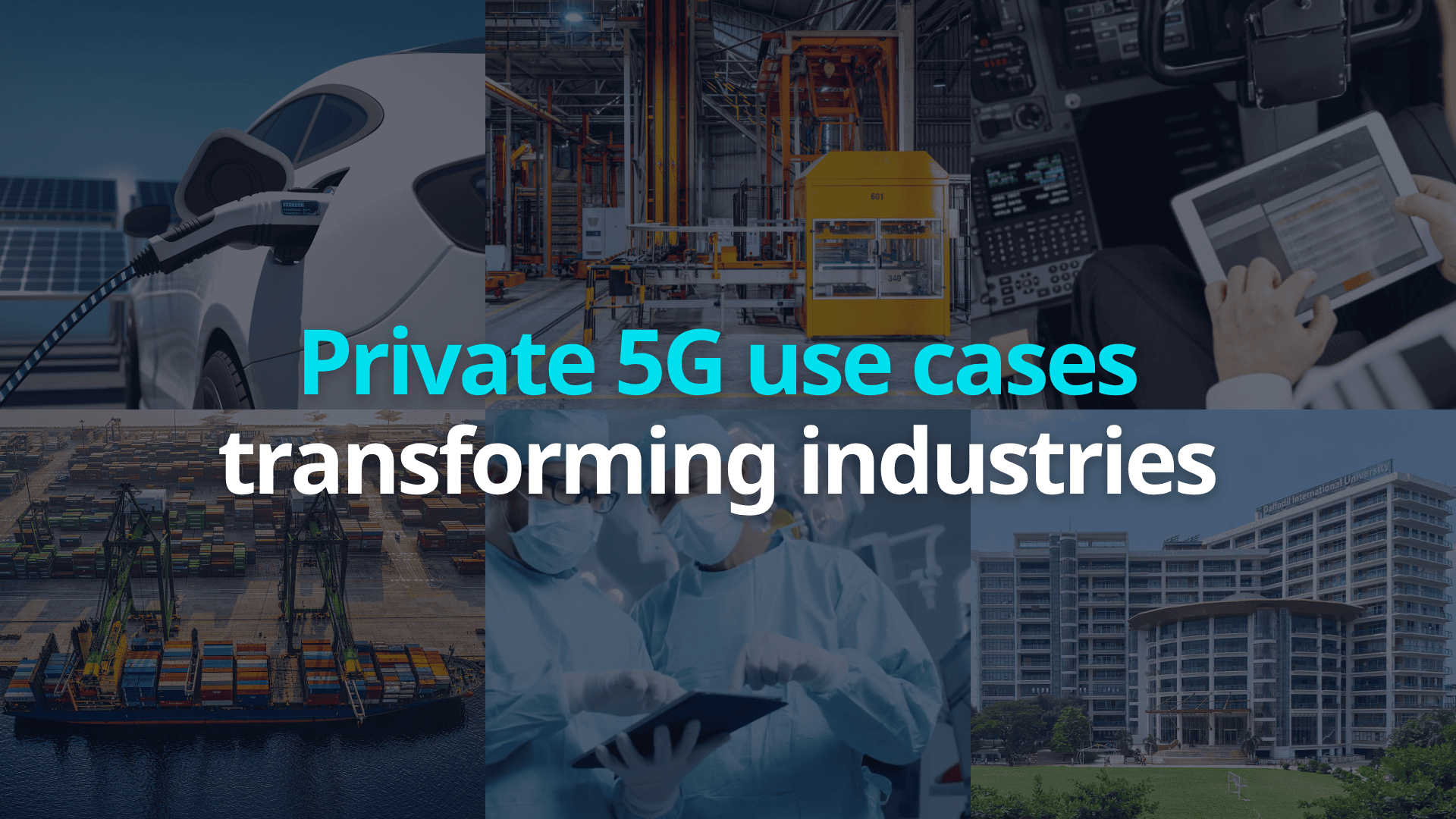
Private 5G use cases transforming industries
Private 5G is not a theoretical concept but a live enabler across multiple sectors:
Energy and utilities
Municipal grids now handle dynamic energy flows from solar rooftops, EV charging hubs, and wind farms. Private 5G enables sub‑millisecond monitoring and coordination between substations, control centres, and distributed energy assets. By keeping data on sovereign infrastructure, cities maintain compliance with local privacy and critical infrastructure regulations.
Manufacturing
Factories are replacing wired systems with 5G‑enabled robots, sensors, and autonomous vehicles. Private 5G ensures deterministic latency for precision control and production line automation. It also reduces downtime through predictive analytics processed at the edge.
Logistics and ports
In ports and airports, thousands of devices exchange information in harsh, high‑density environments. A dedicated 5G network provides predictable coverage where Wi‑Fi cannot cope, ensuring safe navigation of autonomous vehicles and real‑time cargo tracking.
Healthcare
Hospitals need seamless connectivity for IoT medical devices, diagnostics, and tele‑robotic surgery systems. Private 5G delivers isolated, high‑bandwidth links that comply with stringent data protection standards while maintaining operational uptime.
Campuses and municipalities
Universities, research campuses, and city‑wide operations use Private 5G to consolidate communications infrastructure, manage security cameras, connect IoT street furniture, and power reliable emergency response networks.
These examples illustrate how Private 5G acts not as an optional upgrade, but as an essential backbone for critical connectivity.
The building blocks of a private 5G ecosystem
A Private 5G network comprises several tightly integrated components:
- Radio access network (RAN): Consists of base stations and antennas that connect user devices.
- Core network: Handles routing, authentication, and service policy management within the private perimeter.
- Spectrum: Can be licensed, shared, or unlicensed depending on regulatory frameworks.
- Edge computing: Brings data processing and analysis close to the source for real‑time decision‑making.
- SIM and device management: Provides identity, encryption, and policy enforcement for embedded devices.
Transatel’s expertise lies in orchestrating these components through flexible architectures – fully private deployments or hybrid ones combining private cores with public roaming for non‑critical assets. This adaptability allows each enterprise to optimise for its precise mix of risk, cost, and geographic scope.
Debunking common myths about private 5G
“Private 5G is only for large enterprises.”
Not true. Modular deployment models now allow smaller campuses and municipalities to adopt scaled‑down configurations tailored to their footprint and budget.
“Wi‑Fi 6 can achieve the same results.”
While Wi‑Fi 6 improves speed, it cannot match the mobility, interference resistance, or guaranteed latency of licensed cellular networks — crucial for moving assets or critical workloads.
“It is too complex to manage.”
Modern management platforms like Transatel’s connectivity management suite abstract the underlying complexity. They offer intuitive dashboards, policy control, and SIM lifecycle management, making administration simple and transparent.
Editor’s final thoughts:
Cloud technology may capture headlines, but connectivity defines what is possible in practice. Without a robust, secure, and deterministic communication layer, even the smartest applications cannot perform consistently.
Private 5G provides that foundation – a network model where performance, security, and sovereignty align. For cities striving for resilience, for industries driving automation, and for organisations seeking control over their digital future, Private 5G is rapidly moving from an emerging technology to a fundamental requirement.
Transatel’s global experience in advanced cellular IoT and Private 5G architectures enables enterprises and municipalities to realise this future confidently, and tailoring 4G/5G architectures that align with operational priorities and compliance mandates.
Book a FREE consultation with Transatel’s specialists today to future‑proof your infrastructure with secure and intelligent Private 5G connectivity.